
Why Is My AC Making a Rattling Noise?
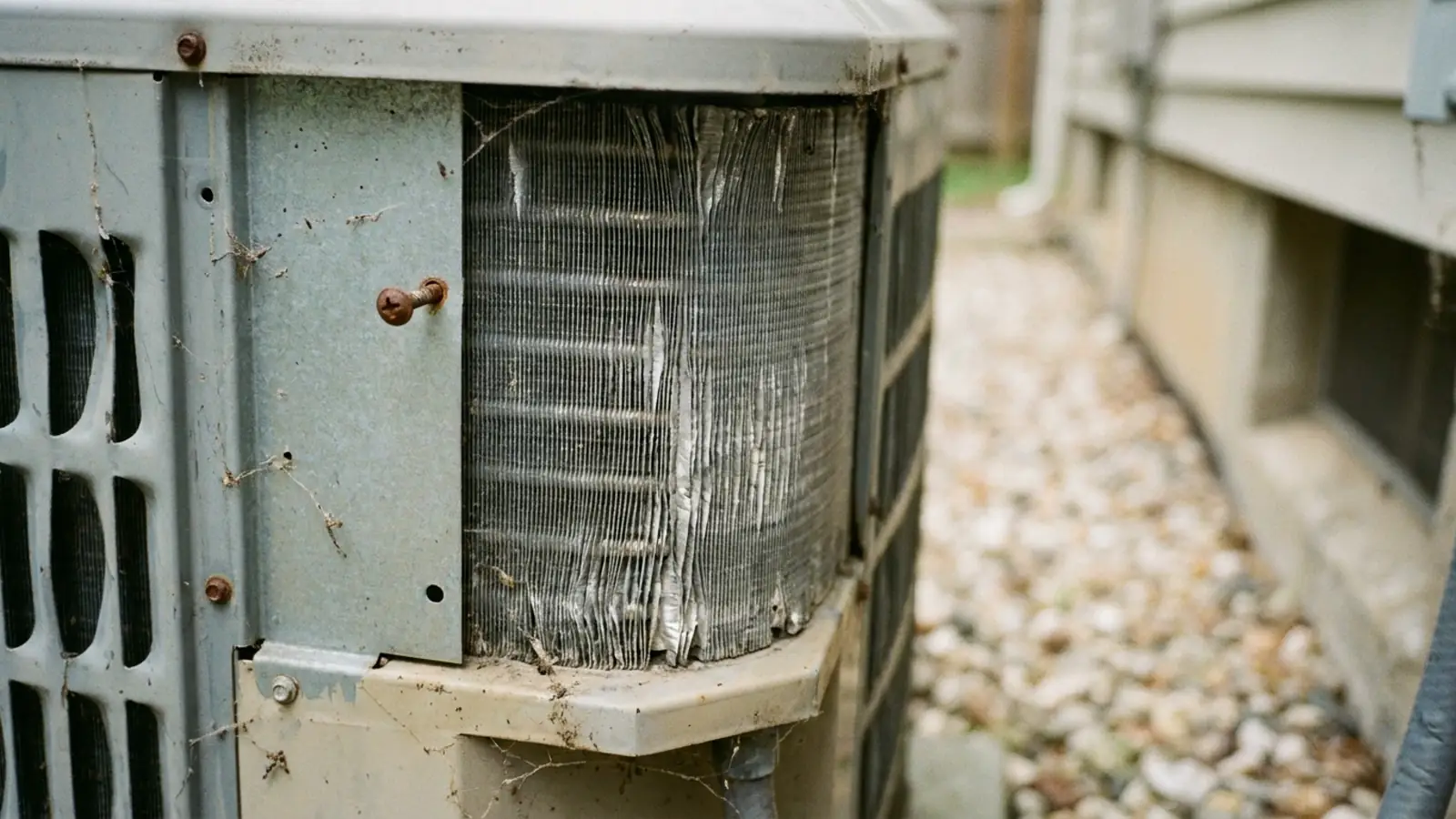
Causes, safe checks and when to call a professional
Expert Answer: AC Making a Rattling Noise
Rattling means something is loose. Most often it is a panel screw, a service cover, a piece of duct, or debris such as twigs or gravel inside the outdoor cabinet. Less often it is a fan blade coming loose, a blower wheel losing balance, or compressor mounting hardware failing. Start with the free fixes: shut off power at the disconnect, look inside the outdoor cabinet for debris, and check that all panels and screws are tight. If the rattle is deep inside the equipment and changes with fan speed, stop running the system and have it inspected.
Check these 3 things first
- 1Turn off power at the outdoor disconnect before inspecting the cabinet for debris.
- 2Note whether the rattle is indoors, outdoors, or in the ductwork.
- 3Note whether the rattle changes when blower or fan speed changes.
How Serious Is This?
GREEN — this issue's severity level
Usually Manageable(this issue)
Often resolved with basic homeowner checks and routine maintenance.
YELLOW
Inspection Recommended
Worth a professional diagnosis soon to avoid a larger repair.
RED
Potentially Serious
Stop using the system and get professional help right away.
Most Likely Causes of an AC Making a Rattling Noise
1. Loose access panel or screws
The most common and simplest cause of rattling at the outdoor unit.
2. Debris inside the outdoor cabinet
Twigs, gravel or leaves striking the fan blade produce intermittent clatter.
3. Loose or damaged fan blade
A blade loosening on its hub creates a rattle that worsens quickly and can be dangerous.
4. Unbalanced blower wheel
Dirt buildup or a thrown balance weight causes a rattling vibration indoors.
5. Loose duct or register
Sheet metal vibrating against framing rattles in time with airflow.
6. Failing compressor mounts
Deteriorated grommets let the compressor knock against the cabinet.
7. Line set contacting the house
Refrigerant lines touching framing transmit a buzzy rattle indoors.
Safe Homeowner Checks for an AC Making a Rattling Noise
- Turn power off at the outdoor disconnect before looking inside the cabinet.
- Remove visible debris from the top grille area.
- Check that all panel screws are present and tight.
- Note whether the rattle is indoors, outdoors or in the ductwork.
- Note whether it changes with fan speed.
- Check whether refrigerant lines are touching the house or each other.
Stop and get help if you notice
- • Rattle that worsens rapidly.
- • Metallic scraping mixed with the rattle.
- • Visible fan blade movement or wobble.
2-Minute Tests for an AC Making a Rattling Noise
Each test isolates one specific cause so you know what you are dealing with before anyone quotes you a repair. Stop immediately if anything feels unsafe.
Panel press-test
About 3 minutesTools: None
Tests for: Loose access panel or screws
- With the system running, press firmly on each outdoor cabinet panel one at a time.
- Note which panel, if any, changes the rattle when pressed.
- Shut off power and tighten screws on that panel.
- Normal result
- No panel changes the sound when pressed.
- Problem result
- One specific panel quiets the rattle noticeably when pressed.
What it means: This confirms a loose panel as the source, the simplest and cheapest cause.
Cabinet debris check
About 5 minutesTools: Flashlight
Tests for: Debris inside the outdoor cabinet
- Turn off power at the outdoor disconnect.
- Shine a flashlight through the top grille and along the base of the cabinet.
- Remove any visible twigs, gravel or leaves by hand.
- Normal result
- No debris found, or debris removed resolves the rattle on restart.
- Problem result
- Rattle continues after removing all visible debris.
What it means: Persistence after clearing debris points to an internal component rather than loose material.
Fan speed correlation test
About 3 minutesTools: None
Tests for: Loose or damaged fan blade
- Listen to the rattle while the outdoor fan runs at normal speed.
- Note whether the rattle rate speeds up and slows down with the fan, not randomly.
- With power off, look at the blade for visible looseness or wobble.
- Normal result
- No rattle tied to fan rotation speed.
- Problem result
- The rattle rhythm clearly tracks fan rotation speed.
What it means: A rattle locked to rotation speed suggests a loose blade, which can escalate quickly if ignored.
Duct contact point check
About 5 minutesTools: Flashlight
Tests for: Loose duct or register
- Check accessible ductwork in the attic or basement for contact with framing.
- Note any spot where metal touches wood or another duct section.
- Listen there specifically during a run cycle.
- Normal result
- No duct-to-framing contact found, and no localized rattle there.
- Problem result
- Duct visibly touches framing at a spot where the rattle is loudest.
What it means: This identifies a duct contact point that vibrates against the structure during operation.
What Fixing an AC Making a Rattling Noise Typically Costs
Panel tightening
- DIY
- $0
- Professional
- $80-$150
- Typical time
- 15 minutes
Debris removal
- DIY
- $0
- Professional
- Included in service call
- Typical time
- 15 minutes
Fan blade replacement
- DIY
- Not a DIY repair
- Professional
- $150-$400
- Typical time
- 1 hour
Blower wheel cleaning/balancing
- DIY
- Not a DIY repair
- Professional
- $150-$350
- Typical time
- 1-2 hours
Duct isolation at framing contact
- DIY
- $10-$30
- Professional
- $100-$250
- Typical time
- 1 hour
| Problem | DIY cost | Professional cost | Typical time |
|---|---|---|---|
| Panel tightening | $0 | $80-$150 | 15 minutes |
| Debris removal | $0 | Included in service call | 15 minutes |
| Fan blade replacement | Not a DIY repair | $150-$400 | 1 hour |
| Blower wheel cleaning/balancing | Not a DIY repair | $150-$350 | 1-2 hours |
| Duct isolation at framing contact | $10-$30 | $100-$250 | 1 hour |
Ranges are national estimates for planning only. Local labor rates, equipment access and parts availability change what you will actually be quoted.
Working Through an AC Making a Rattling Noise
Is the rattle at the outdoor unit?
Yes: Check debris, panels and fan blade with the power off.
No: Continue.
Does it change with fan speed?
Yes: A rotating component is involved — have it inspected before it fails.
No: Continue.
Is it in the ductwork?
Yes: Secure loose duct sections and registers; add isolation where duct contacts framing.
No: Schedule a mechanical inspection.
What the technician will check
- Fan blade hub and set screw condition.
- Blower wheel balance and cleanliness.
- Compressor mount and grommet condition.
- Panel and fastener inventory.
- Line set isolation.
Repair considerations
- • Tightening hardware and removing debris is usually included in a service visit.
- • Fan blade or blower wheel replacement is moderate.
- • Ignoring a loose blade can cause damage far more expensive than the inspection.
What this actually means
Vibration is constant in an operating air conditioner. Anything that loses its grip — a fastener, a bracket, a blade weight — begins to resonate with that vibration. Catching a rattle early is worthwhile because a loose fan blade or blower wheel can cause substantial damage once it lets go.
When to Call an HVAC Professional About an AC Making a Rattling Noise
- The rattle involves a rotating component.
- It is getting worse.
- There is scraping or grinding mixed in.
- You cannot locate the source safely.
Preventing an AC Making a Rattling Noise From Coming Back
- • Keep landscaping and debris away from the outdoor unit.
- • Have fasteners checked annually.
- • Clean the blower wheel during maintenance.
Worth doing yourself
- • Clear debris from the outdoor cabinet with power off at the disconnect.
- • Tighten all accessible panel screws.
- • Add foam isolation where accessible ductwork touches framing.
- • Keep landscaping trimmed back from the outdoor unit.
Do not waste money on
- • Do not remove electrical panels to inspect internal components yourself.
- • Do not keep running the system if the rattle is clearly tied to fan rotation and worsening.
Related Problems: AC Making a Rattling Noise
- GREEN — Usually ManageableAC NoisesWhy Is My AC Making Noise?Read this next if sound type not yet identified — the page must act as a sound directory that maps each noise to its likely cause.View answer
- YELLOW — Inspection RecommendedAC NoisesWhy Is My AC Making a Loud Noise?Read this next if a sudden loud sound rather than gradually rising volume — the visitor needs a stop-or-continue decision immediately.View answer
- GREEN — Usually ManageableAC NoisesWhy Is My AC Unit So Loud?Read this next if the physical unit — usually the outdoor condenser — is the noise source, with emphasis on equipment hardware and placement rather than duct noise.View answer
- GREEN — Usually ManageableAC NoisesWhy Is My AC So Loud?Read this next if overall sound level has increased across the whole system — a volume complaint rather than a specific identifiable sound.View answer
- YELLOW — Inspection RecommendedAC NoisesWhy Is My AC Making a Weird Noise?Read this next if the sound is unfamiliar and hard to describe — the visitor needs help characterising it and deciding whether to keep running the system.View answer
- YELLOW — Inspection RecommendedAC Won't StartWhy Is My AC Fan Not Turning On?Read this next if a fan is not spinning — page must first distinguish the indoor blower from the outdoor condenser fan, since they fail differently.View answer
- All AC Noises problemsBrowse category
Frequently Asked Questions About an AC Making a Rattling Noise
Guidance this page draws on
- HVAC manufacturer service literature — Fan blade hub and compressor mount inspection procedures.
- ACCA — Duct support and isolation practices to prevent vibration transfer.