
Why Is My AC So Loud?
Causes, safe checks and when to call a professional
Expert Answer: AC So Loud
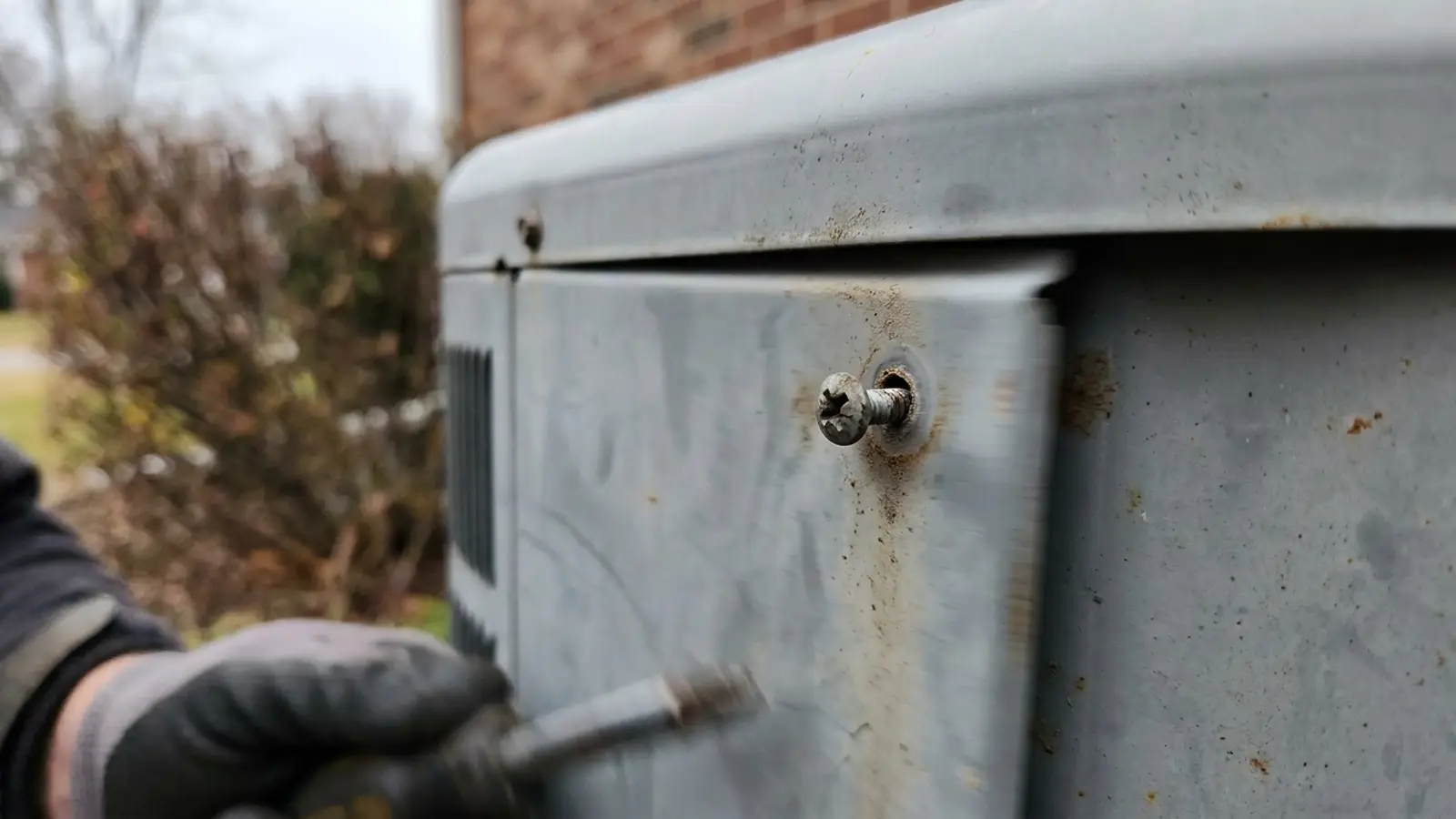
A system that has simply gotten louder overall — without a distinct new sound — is usually reacting to airflow or age. Restricted airflow from a dirty filter or closed registers makes ducts roar. Loose access panels and screws vibrate. Aging compressors and motors get noisier as bearings wear and mounts harden. Undersized return duct is a very common cause in homes that have always been loud. None of these are emergencies, but a sudden jump in volume paired with any grinding or banging deserves prompt attention.
Check these 3 things first
- 1Stand at the return grille, then the equipment, then outdoors to find where the volume peaks.
- 2Replace the filter and open every supply register before judging anything else.
- 3Check whether the loudness rose gradually over months or jumped suddenly this week.
How Serious Is This?
GREEN — this issue's severity level
Usually Manageable(this issue)
Often resolved with basic homeowner checks and routine maintenance.
YELLOW
Inspection Recommended
Worth a professional diagnosis soon to avoid a larger repair.
RED
Potentially Serious
Stop using the system and get professional help right away.
Most Likely Causes of an AC So Loud
1. Restricted or undersized return duct
Air forced through too small an opening creates a persistent roar at the return grille.
2. Dirty filter or closed registers
Higher duct velocity means more noise everywhere in the system.
3. Loose panels, screws and duct connections
Vibration transmits through cabinet metal and duct into the structure.
4. Aging compressor
Older compressors run louder as internal components and mounts wear.
5. Worn blower or condenser fan bearings
Bearing wear produces a growing hum or growl.
6. Hard mounting to the structure
Equipment mounted directly to framing transmits vibration into living space.
Safe Homeowner Checks for an AC So Loud
- Replace the filter and open all supply registers.
- Check that access panels are secured and screws are tight.
- Note whether the noise is loudest at the return grille, the equipment, or the outdoor unit.
- Check whether the outdoor unit sits level on its pad.
- Clear debris from the outdoor unit with the power off.
- Note whether the volume increased suddenly or gradually.
Stop and get help if you notice
- • Grinding or metal-on-metal sound.
- • Loud banging at startup or shutdown.
- • Noise accompanied by reduced cooling.
2-Minute Tests for an AC So Loud
Each test isolates one specific cause so you know what you are dealing with before anyone quotes you a repair. Stop immediately if anything feels unsafe.
Return grille roar test
About 3 minutesTools: None
Tests for: Restricted or undersized return duct
- Stand directly in front of the return air grille while the system runs.
- Listen for a steady rushing or roaring tone concentrated right at the grille.
- Cover half the grille briefly with your hand and see if the pitch rises.
- Normal result
- A soft, even air movement sound with no sharp roar.
- Problem result
- A loud, sustained roar localized right at the grille opening.
What it means: A roar concentrated at the return points to restriction or an undersized opening rather than a mechanical fault.
Filter and register sweep
About 5 minutesTools: Flashlight
Tests for: Dirty filter or closed registers
- Pull the filter and hold it up to a light to check how much it blocks.
- Walk every room and fully open each supply register.
- Run the system for 5 minutes and reassess the overall volume.
- Normal result
- Volume noticeably drops once the filter is clean and registers are open.
- Problem result
- Volume stays high even with a clean filter and open registers.
What it means: No improvement means the noise source is mechanical or structural, not airflow restriction.
Panel and screw check
About 5 minutesTools: Screwdriver
Tests for: Loose panels, screws and duct connections
- Visually inspect indoor and outdoor unit access panels for gaps.
- Press firmly on each panel while the system runs and listen for a rattle change.
- Tighten any screws that turn freely.
- Normal result
- Panels sit flush and pressing on them changes nothing.
- Problem result
- Pressing a panel noticeably quiets a buzz or rattle.
What it means: A loose panel confirmed this way is a free, immediate fix.
Bearing hum listen test
About 3 minutesTools: None
Tests for: Worn blower or condenser fan bearings
- Stand near the indoor air handler and the outdoor unit separately.
- Listen for a steady growl or hum that stays constant regardless of airflow.
- Compare the pitch to what you recall from when the system was newer, if possible.
- Normal result
- A soft, consistent motor hum with no growling undertone.
- Problem result
- A rising growl or grinding hum that has gotten noticeably worse.
What it means: A growing growl suggests bearing wear that will progress without service.
What Fixing an AC So Loud Typically Costs
Filter replacement
- DIY
- $15-$30
- Professional
- N/A
- Typical time
- 10 minutes
Tighten panels and fasteners
- DIY
- $0
- Professional
- $80-$150
- Typical time
- 20 minutes
Return duct enlargement
- DIY
- Not a DIY repair
- Professional
- $400-$1,500
- Typical time
- 4-8 hours
Isolation pads and sound blanket
- DIY
- $30-$80
- Professional
- $150-$350
- Typical time
- 1 hour
Compressor replacement (age-related noise)
- DIY
- Not a DIY repair
- Professional
- $1,800-$3,500
- Typical time
- 4-6 hours
| Problem | DIY cost | Professional cost | Typical time |
|---|---|---|---|
| Filter replacement | $15-$30 | N/A | 10 minutes |
| Tighten panels and fasteners | $0 | $80-$150 | 20 minutes |
| Return duct enlargement | Not a DIY repair | $400-$1,500 | 4-8 hours |
| Isolation pads and sound blanket | $30-$80 | $150-$350 | 1 hour |
| Compressor replacement (age-related noise) | Not a DIY repair | $1,800-$3,500 | 4-6 hours |
Ranges are national estimates for planning only. Local labor rates, equipment access and parts availability change what you will actually be quoted.
Working Through an AC So Loud
Is the noise loudest at the return grille?
Yes: Airflow restriction or undersized return — a duct issue.
No: Continue.
Is the noise coming from the outdoor unit?
Yes: Check for debris, loose panels, level pad and fan or compressor wear.
No: Continue.
Did the volume increase suddenly?
Yes: Suspect a mechanical change — loose part, failing bearing — and have it inspected.
No: Gradual increase usually reflects age and maintenance needs.
What the technician will check
- Static pressure and return duct sizing.
- Blower and fan bearing condition.
- Compressor sound signature and mounting.
- Panel, screw and duct connection tightness.
- Vibration isolation at the pad and hangers.
Repair considerations
- • Adding return air capacity is duct work, not equipment repair.
- • Sound blankets and isolation pads are inexpensive mitigations.
- • A loud, aging compressor is a data point in a replacement conversation but not a failure by itself.
What this actually means
Overall loudness is a system-level symptom: it comes from air moving too fast through undersized paths, from vibration finding new resonance, or from mechanical wear raising the noise floor. Distinct sounds like hissing or rattling point at specific faults; general volume usually points at airflow design or maintenance.
When to Call an HVAC Professional About an AC So Loud
- The sound includes grinding, screeching or banging.
- Volume increased suddenly.
- Noise comes with reduced cooling.
- The outdoor unit vibrates hard enough to move.
Preventing an AC So Loud From Coming Back
- • Unusual noises help a technician identify failing motors, fans, bearings, refrigerant conditions or loose components.
- • Keep filters clean so duct velocity stays reasonable.
- • Have panels and mounts checked at annual service.
- • Maintain a level pad under the outdoor unit.
Worth doing yourself
- • Replace the filter on schedule with a correctly sized, low-restriction filter.
- • Open all supply registers throughout the home.
- • Tighten loose access panel screws on both indoor and outdoor units.
- • Level the outdoor pad if it has settled.
- • Clear leaves and debris from around the outdoor cabinet.
Do not waste money on
- • Do not buy generic soundproofing foam for the equipment closet before confirming the noise source.
- • Do not assume a loud unit needs replacement without checking cheap causes first.
Related Problems: AC So Loud
- GREEN — Usually ManageableAC NoisesWhy Is My AC Unit So Loud?Read this next if the physical unit — usually the outdoor condenser — is the noise source, with emphasis on equipment hardware and placement rather than duct noise.View answer
- GREEN — Usually ManageableAC NoisesWhy Is My AC Making Noise?Read this next if sound type not yet identified — the page must act as a sound directory that maps each noise to its likely cause.View answer
- YELLOW — Inspection RecommendedAC NoisesWhy Is My AC Making a Loud Noise?Read this next if a sudden loud sound rather than gradually rising volume — the visitor needs a stop-or-continue decision immediately.View answer
- GREEN — Usually ManageableAC NoisesWhy Is My AC Making a Rattling Noise?Read this next if loose hardware, debris and vibration are the differential — a mechanical looseness problem that is usually cheap to fix but can escalate.View answer
- YELLOW — Inspection RecommendedAC NoisesWhy Is My AC Making a Weird Noise?Read this next if the sound is unfamiliar and hard to describe — the visitor needs help characterising it and deciding whether to keep running the system.View answer
- GREEN — Usually ManageableAC Operation ProblemsWhy Is My AC Running Constantly?Read this next if system never shuts off — visitor wants to know whether continuous runtime is normal and what drives it.View answer
- All AC Noises problemsBrowse category
Frequently Asked Questions About an AC So Loud
Guidance this page draws on
- U.S. Department of Energy — Guidance on duct sizing and airflow efficiency affecting system noise.
- ACCA — Residential duct design standards relevant to return air sizing.
- HVAC manufacturer service literature — Compressor sound and mounting specifications by equipment age.