
Why Is My AC Making Noise?
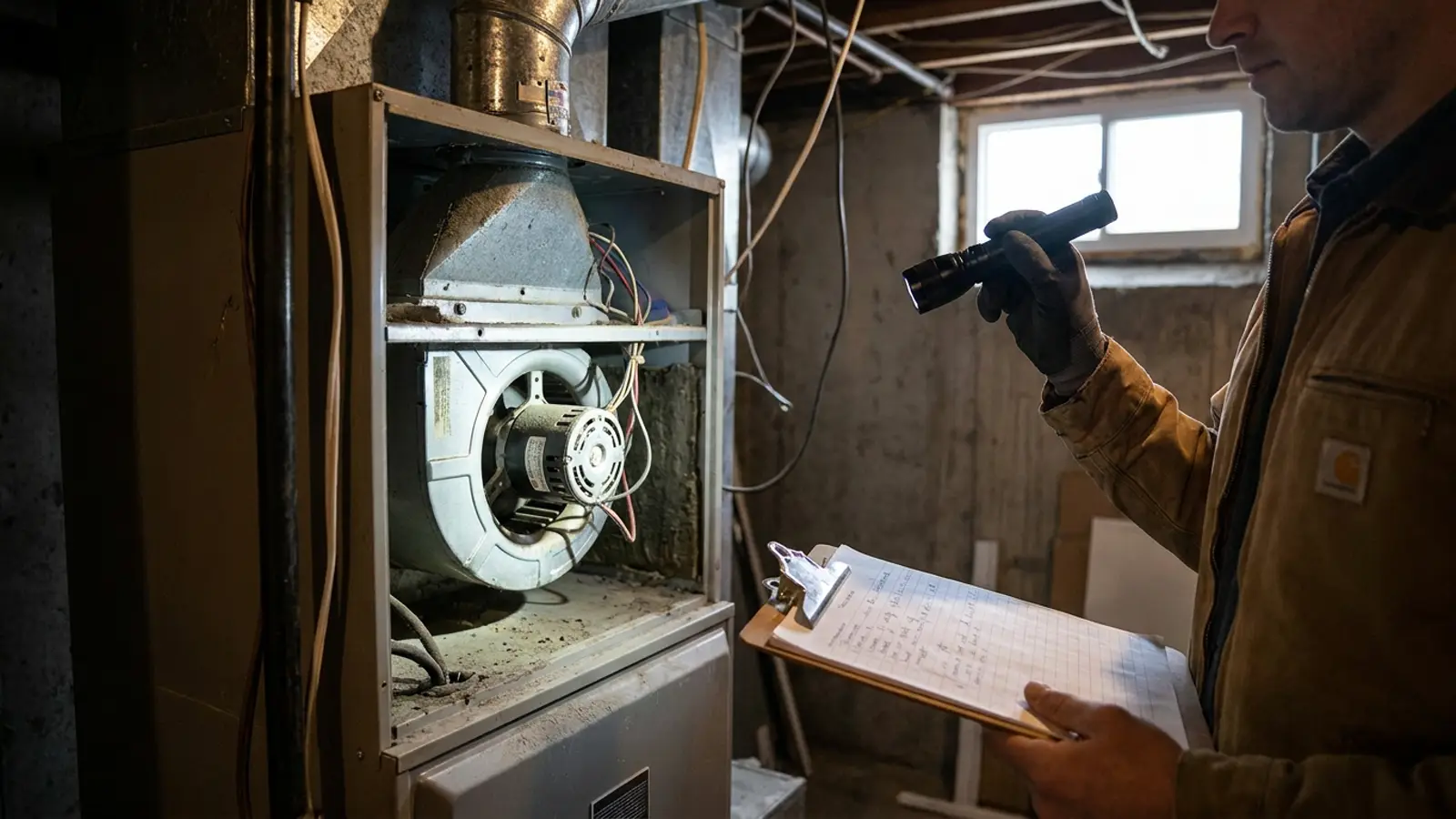
Causes, safe checks and when to call a professional
Expert Answer: AC Making Noise
The specific sound is the diagnosis. Hissing suggests refrigerant escaping or air moving through a restriction. Rattling usually means loose hardware or debris. Buzzing points to electrical components or vibration. Clicking at startup is normal once, but repeated clicking means a relay or control problem. Screeching indicates bearings or belt issues. Banging usually means a loose or broken internal part in the compressor. Grinding means metal-on-metal wear. Identify your sound first, then act — grinding, banging and continuous buzzing warrant shutting the system off.
Check these 3 things first
- 1Identify exactly which category your sound falls into: hissing, rattling, buzzing, clicking, screeching, banging or gurgling.
- 2Note whether it happens at startup, shutdown, or continuously while running.
- 3Record the sound on your phone before calling anyone.
How Serious Is This?
GREEN — this issue's severity level
Usually Manageable(this issue)
Often resolved with basic homeowner checks and routine maintenance.
YELLOW
Inspection Recommended
Worth a professional diagnosis soon to avoid a larger repair.
RED
Potentially Serious
Stop using the system and get professional help right away.
Most Likely Causes of an AC Making Noise
1. Hissing
Refrigerant leak, a restriction in the metering device, or air whistling through a duct or filter gap.
2. Rattling
Loose panel screws, twigs or debris in the outdoor unit, or a failing fan blade.
3. Buzzing
Electrical arcing at a contactor, a failing capacitor, or loose components vibrating.
4. Clicking
One click at start and stop is normal; continuous clicking indicates relay or control trouble.
5. Screeching or squealing
Motor bearings or, on older equipment, a belt-driven blower.
6. Banging or clanking
A loose or broken compressor component, or an unbalanced blower wheel.
7. Gurgling
Often condensate draining, sometimes refrigerant flow noise.
Safe Homeowner Checks for an AC Making Noise
- Identify where the sound originates: indoor unit, outdoor unit, or the ductwork.
- Note when it happens: at startup, during running, at shutdown, or constantly.
- Record it on your phone — it helps a technician enormously.
- Check for loose panels and visible debris with the power off.
- Replace the filter if airflow noise is suspected.
- Shut the system off if you hear grinding, banging or continuous buzzing.
Stop and get help if you notice
- • Grinding or metal-on-metal contact.
- • Loud banging from the compressor.
- • Continuous electrical buzzing.
- • Hissing paired with rapidly declining cooling.
2-Minute Tests for an AC Making Noise
Each test isolates one specific cause so you know what you are dealing with before anyone quotes you a repair. Stop immediately if anything feels unsafe.
Hiss location test
About 3 minutesTools: None
Tests for: Hissing
- Listen near the indoor coil and the outdoor copper lines separately.
- Then listen near ducts, registers and the filter slot.
- Note whether the hiss is continuous or only for a minute after shutdown.
- Normal result
- A brief hiss lasting under two minutes right after shutdown.
- Problem result
- A continuous hiss during operation localized at the coil or lines.
What it means: Continuous coil-area hissing during operation is the refrigerant leak pattern, not normal equalization.
Rattle source walk
About 5 minutesTools: None
Tests for: Rattling
- Walk from the indoor unit to the outdoor unit while the system runs.
- Note where the rattle is loudest.
- With power off, check for loose panels or visible debris at that location.
- Normal result
- No rattle found, or one that stops after tightening a panel.
- Problem result
- Rattle persists and seems to come from inside a running motor or fan area.
What it means: A rattle that survives panel tightening likely involves a moving part rather than hardware.
Startup squeal timing test
About 2 minutesTools: None
Tests for: Screeching or squealing
- Listen carefully during the first 10 seconds after the system starts.
- Note whether the squeal fades after startup or continues throughout the run.
- Repeat on the next cycle to confirm the pattern.
- Normal result
- No squeal, or a squeal that fades within seconds of startup.
- Problem result
- A squeal that continues throughout the run cycle.
What it means: A persistent squeal usually indicates motor bearing wear needing inspection.
Banging shutdown decision test
About 1 minuteTools: None
Tests for: Banging or clanking
- If you hear banging or clanking, shut the system off at the thermostat immediately.
- Note which unit (indoor or outdoor) produced the sound.
- Do not restart the system until it has been inspected.
- Normal result
- No banging occurs during normal operation.
- Problem result
- Any banging or clanking sound, at any volume.
What it means: Banging indicates a loose or broken internal component that worsens with continued operation.
What Fixing an AC Making Noise Typically Costs
Contactor replacement (clicking/buzzing)
- DIY
- Not a DIY repair
- Professional
- $150-$300
- Typical time
- 1 hour
Capacitor replacement (buzzing/humming)
- DIY
- Not a DIY repair
- Professional
- $150-$350
- Typical time
- 45 minutes
Debris removal and panel tightening
- DIY
- $0
- Professional
- $80-$150
- Typical time
- 20 minutes
Blower wheel balancing
- DIY
- Not a DIY repair
- Professional
- $200-$450
- Typical time
- 1-2 hours
Refrigerant leak diagnosis
- DIY
- Not a DIY repair
- Professional
- $150-$350 (diagnosis only)
- Typical time
- 1-2 hours
| Problem | DIY cost | Professional cost | Typical time |
|---|---|---|---|
| Contactor replacement (clicking/buzzing) | Not a DIY repair | $150-$300 | 1 hour |
| Capacitor replacement (buzzing/humming) | Not a DIY repair | $150-$350 | 45 minutes |
| Debris removal and panel tightening | $0 | $80-$150 | 20 minutes |
| Blower wheel balancing | Not a DIY repair | $200-$450 | 1-2 hours |
| Refrigerant leak diagnosis | Not a DIY repair | $150-$350 (diagnosis only) | 1-2 hours |
Ranges are national estimates for planning only. Local labor rates, equipment access and parts availability change what you will actually be quoted.
Working Through an AC Making Noise
Is the sound electrical — buzzing, arcing, crackling?
Yes: Shut the system off and call for service.
No: Continue.
Is it mechanical — grinding, banging, screeching?
Yes: Shut the system off to avoid further damage and schedule service.
No: Continue.
Is it airflow related — whistling, roaring, rushing?
Yes: Check filters, registers and duct restrictions first.
No: Record the sound and have it diagnosed.
What the technician will check
- Component-by-component sound isolation.
- Electrical testing of contactor and capacitor.
- Bearing and blower wheel inspection.
- Refrigerant leak detection if hissing is present.
- Duct and airflow evaluation.
What this actually means
Air conditioners make predictable sounds when they fail, because there are only a few things inside them that can move, vibrate, arc or leak. Treating the noise as a fingerprint rather than a nuisance turns a vague complaint into a specific component suspicion.
When to Call an HVAC Professional About an AC Making Noise
- The sound is electrical or grinding.
- Cooling is declining along with the noise.
- The noise is new and getting louder.
- You cannot identify the source.
Preventing an AC Making Noise From Coming Back
- • Annual inspection catches loose hardware and worn bearings early.
- • Keep debris out of the outdoor unit.
- • Maintain filters to limit airflow noise.
Worth doing yourself
- • Replace the filter if any noise sounds airflow-related.
- • Clear debris from the outdoor cabinet with power off.
- • Tighten visible panel screws.
- • Record the sound and note its timing before calling for service.
Do not waste money on
- • Do not open the electrical or compressor compartment to investigate buzzing or arcing.
- • Do not keep running the system through repeated banging to see if it stops on its own.
Related Problems: AC Making Noise
- YELLOW — Inspection RecommendedAC NoisesWhy Is My AC Making a Weird Noise?Read this next if the sound is unfamiliar and hard to describe — the visitor needs help characterising it and deciding whether to keep running the system.View answer
- YELLOW — Inspection RecommendedAC NoisesWhy Is My AC Making a Hissing Noise?Read this next if specifically a hissing sound — refrigerant escape, valve noise and duct leakage are the differential, with a real leak risk to rule out.View answer
- GREEN — Usually ManageableAC NoisesWhy Is My AC Making a Rattling Noise?Read this next if loose hardware, debris and vibration are the differential — a mechanical looseness problem that is usually cheap to fix but can escalate.View answer
- YELLOW — Inspection RecommendedAC NoisesWhy Is My AC Making a Loud Noise?Read this next if a sudden loud sound rather than gradually rising volume — the visitor needs a stop-or-continue decision immediately.View answer
- GREEN — Usually ManageableAC NoisesWhy Is My AC So Loud?Read this next if overall sound level has increased across the whole system — a volume complaint rather than a specific identifiable sound.View answer
- GREEN — Usually ManageableAC NoisesWhy Is My AC Whistling?Read this next if high-pitched airflow noise driven by duct static pressure and restriction — an air distribution problem rather than a mechanical failure.View answer
- All AC Noises problemsBrowse category
Frequently Asked Questions About an AC Making Noise
Guidance this page draws on
- HVAC manufacturer service literature — Component-specific sound signatures used in field diagnostics.
- ACCA — Residential system inspection and maintenance checklists.