
Why Is My AC Blowing Smoke?
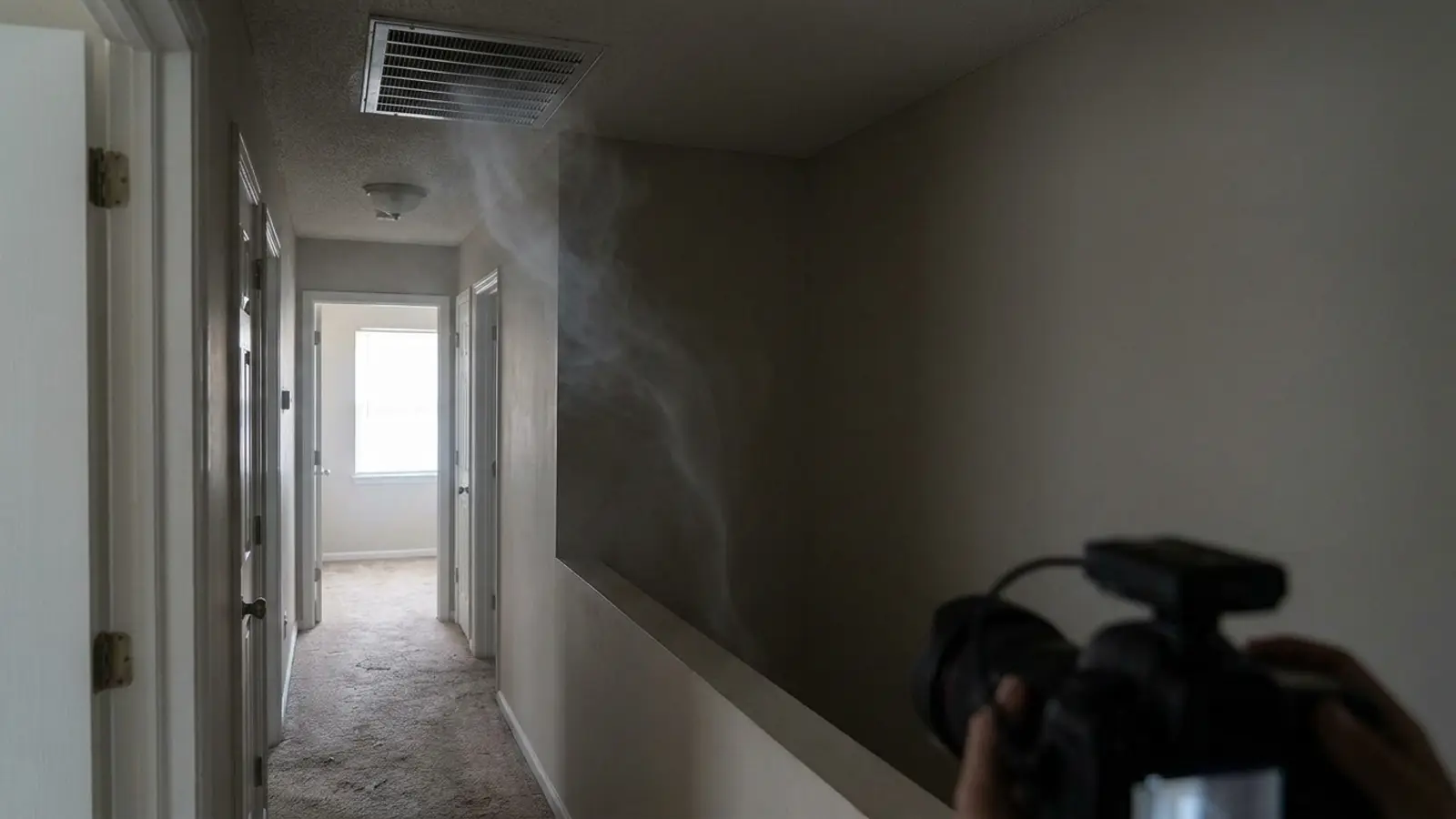
Causes, safe checks and when to call a professional
Safety first — treat this as urgent
Shut the system off at the thermostat and breaker. If you see fire, smell burning, or suspect a gas leak, leave the building and call 911 before anything else.
Expert Answer: AC Blowing Smoke
Treat this as a safety question first. If you see or smell actual smoke — grey or dark, with a burning, acrid or electrical odor — turn the system off at the thermostat and at the breaker if you can do so safely, and do not restart it. If there is fire, sparking, or any immediate hazard, leave the area and contact emergency services. Not everything that looks like smoke is smoke: on humid days, cold supply air can produce a harmless white mist at the registers, and a new system can release a brief burning-dust smell as manufacturing residue burns off. Colour and smell are the distinguishing factors.
Check these 3 things first
- 1Turn the system off at the thermostat right away.
- 2If you can do so safely, switch off the AC breaker at the panel.
- 3Look and smell from a safe distance for flame, sparking, or an acrid odor before doing anything else.
How Serious Is This?
GREEN
Usually Manageable
Often resolved with basic homeowner checks and routine maintenance.
YELLOW
Inspection Recommended
Worth a professional diagnosis soon to avoid a larger repair.
RED — this issue's severity level
Potentially Serious(this issue)
Stop using the system and get professional help right away.
Most Likely Causes of an AC Blowing Smoke
1. Overheating motor or windings
A blower or fan motor failing electrically produces an acrid smell and visible smoke.
2. Burning or arcing wiring
Loose connections, damaged insulation or a failing contactor can smoke and are a fire risk.
3. Seized bearing or belt friction
Mechanical friction generates heat, smoke and a rubbery or burning odor.
4. Debris burning on a heating element
On systems with electric heat, dust on the elements can smoke, particularly at first use.
5. Harmless condensation fog
Cold supply air meeting very humid room air creates a white mist with no smell.
6. New-equipment burn-off
A brief burning-dust smell during the first operation of new equipment is common and short-lived.
Safe Homeowner Checks for an AC Blowing Smoke
- Turn the system OFF at the thermostat immediately.
- If safe, switch off the AC breaker at the panel.
- Do not restart the system to "see if it does it again."
- Note the color and smell: white and odorless suggests condensation; grey, dark or acrid suggests real smoke.
- Check that smoke alarms are functioning.
- Ventilate the area if there is smoke odor and it is safe to do so.
- Leave the building and call emergency services if you see fire, sparks or heavy smoke.
Stop and get help if you notice
- • Visible flame, sparking or arcing.
- • Acrid, electrical or burning-plastic odor.
- • Smoke that continues after the system is switched off.
- • Scorch marks or melted components.
2-Minute Tests for an AC Blowing Smoke
Each test isolates one specific cause so you know what you are dealing with before anyone quotes you a repair. Stop immediately if anything feels unsafe.
Observe from a safe distance
About 3 minutesTools: None
Tests for: Overheating motor or windings
- Shut the system off at the thermostat first.
- Stand well back from the vents or outdoor unit.
- Look for grey or dark smoke rather than white mist.
- Note any acrid or electrical odor without approaching closer.
- Normal result
- No smoke or odor is present once the system is off.
- Problem result
- Grey or dark smoke with a sharp electrical smell continues.
What it means: Smoke with an electrical odor after shutdown indicates a motor or wiring fault requiring inspection before any restart.
Check for scorch marks after shutdown
About 3 minutesTools: Flashlight
Tests for: Burning or arcing wiring
- Confirm the breaker is off before looking closer.
- From outside the cabinet, look for visible scorch marks or discoloration.
- Do not open any panel covers.
- Note the location of any marks for the technician.
- Normal result
- No visible scorching or melted plastic is present.
- Problem result
- Blackened, melted or discolored areas are visible from outside the cabinet.
What it means: Visible scorching confirms an electrical fault occurred and the system must stay off until inspected.
Color and odor comparison
About 2 minutesTools: None
Tests for: Harmless condensation fog
- Note the color of what you observed: white versus grey or dark.
- Note whether there was any smell at all.
- Check the day's humidity level and whether the mist appeared right at a register.
- Confirm the mist dissipates within a few feet with no residue.
- Normal result
- White, odorless mist that dissipates quickly near a register on a humid day.
- Problem result
- Any grey, dark or persistent smoke, or any burning smell.
What it means: Color and odor are the reliable way to separate harmless condensation fog from an actual electrical or mechanical hazard.
What Fixing an AC Blowing Smoke Typically Costs
Electrical safety inspection
- DIY
- Not a DIY task
- Professional
- $100-$250
- Typical time
- 1-2 hours
Motor replacement after overheating
- DIY
- Not a DIY repair
- Professional
- $300-$900
- Typical time
- 1-2 hours
Wiring and terminal repair
- DIY
- Not a DIY repair
- Professional
- $150-$500
- Typical time
- 1-3 hours
No action needed for condensation fog
- DIY
- $0
- Professional
- N/A
- Typical time
- N/A
| Problem | DIY cost | Professional cost | Typical time |
|---|---|---|---|
| Electrical safety inspection | Not a DIY task | $100-$250 | 1-2 hours |
| Motor replacement after overheating | Not a DIY repair | $300-$900 | 1-2 hours |
| Wiring and terminal repair | Not a DIY repair | $150-$500 | 1-3 hours |
| No action needed for condensation fog | $0 | N/A | N/A |
Ranges are national estimates for planning only. Local labor rates, equipment access and parts availability change what you will actually be quoted.
Working Through an AC Blowing Smoke
Is there fire, sparking, or heavy smoke?
Yes: Leave the area and contact emergency services immediately.
No: Continue.
Is the smoke white, odorless, and only at the registers on a humid day?
Yes: This is most likely condensation fog and is harmless.
No: Continue.
Is there a burning or electrical smell?
Yes: Shut the system off at the breaker and have it inspected before any restart.
No: Shut it off anyway and schedule an inspection.
What the technician will check
- Motor winding condition and insulation resistance.
- Wiring, terminal and contactor inspection for heat damage.
- Bearing and mechanical friction points.
- Heating element and sequencer condition where present.
- Full electrical safety inspection before returning the system to service.
Repair considerations
- • Any component that overheated should be replaced rather than reset.
- • Wiring damage may extend beyond the visible burn point.
- • Older equipment with electrical damage may be a replacement decision.
What this actually means
Real smoke from an air conditioner comes from something overheating — motor windings, wiring insulation, a seized bearing, or a mechanical part in contact with another. None of those are conditions to keep operating through. Condensation fog, by contrast, is water vapour and disappears within a few feet of the register with no odor.
When to Call an HVAC Professional About an AC Blowing Smoke
- There was any real smoke or burning smell.
- You had to shut the system off at the breaker.
- You see scorching, melting or discoloration.
- The system smoked and you do not know why.
Preventing an AC Blowing Smoke From Coming Back
- • Annual electrical inspection with connection tightening.
- • Replace weak capacitors and worn contactors proactively.
- • Keep motors clean and unobstructed so they run cool.
- • Maintain working smoke alarms near equipment locations.
Worth doing yourself
- • Shut the system off at the thermostat and breaker as soon as you notice real smoke.
- • Confirm working smoke alarms near the equipment location.
- • Ventilate the area once it is safe to do so.
- • Leave the system off until a technician has inspected it.
Do not waste money on
- • Do not restart the system to see if the smoke happens again.
- • Do not open electrical panels or attempt any repair yourself.
- • Do not dismiss a burning smell just because you cannot see smoke.
Related Problems: AC Blowing Smoke
- RED — Potentially SeriousAC Operation ProblemsWhy Is My AC Smoking?Read this next if smoke observed at the equipment cabinet itself rather than at the vents — component-level overheating with an immediate shutdown requirement.View answer
- YELLOW — Inspection RecommendedAC Not CoolingWhy Is My AC Hot?Read this next if the equipment itself feels hot to the touch or the visitor is describing a hot unit rather than hot vent air.View answer
- YELLOW — Inspection RecommendedAC Not CoolingWhy Is My AC Blowing Hot Air?Read this next if vent air is genuinely warm or hot rather than merely uncooled, suggesting reversed mode, heat operation, or a total loss of the cooling cycle.View answer
- YELLOW — Inspection RecommendedAC Won't StartWhy Is My AC Not Working?Read this next if broadest possible failure phrasing — visitor has not characterized the symptom, so the page must triage before it diagnoses.View answer
- YELLOW — Inspection RecommendedAC NoisesWhy Is My AC Making a Loud Noise?Read this next if a sudden loud sound rather than gradually rising volume — the visitor needs a stop-or-continue decision immediately.View answer
- YELLOW — Inspection RecommendedAC Won't StartWhy Is My AC Unit Not Turning On?Read this next if the equipment cabinet itself will not start — visitor is standing at the outdoor condenser or air handler observing hardware behaviour.View answer
- All AC Operation Problems problemsBrowse category
Frequently Asked Questions About an AC Blowing Smoke
Guidance this page draws on
- CPSC — General guidance on responding to appliance smoke and electrical fire risk.
- HVAC manufacturer service literature — Motor, wiring and contactor overheating failure signatures.
- NATE — Standards for post-incident electrical inspection before returning equipment to service.