
Why Is My AC Unit Not Turning On?
Causes, safe checks and when to call a professional
Expert Answer: AC Unit Not Turning On
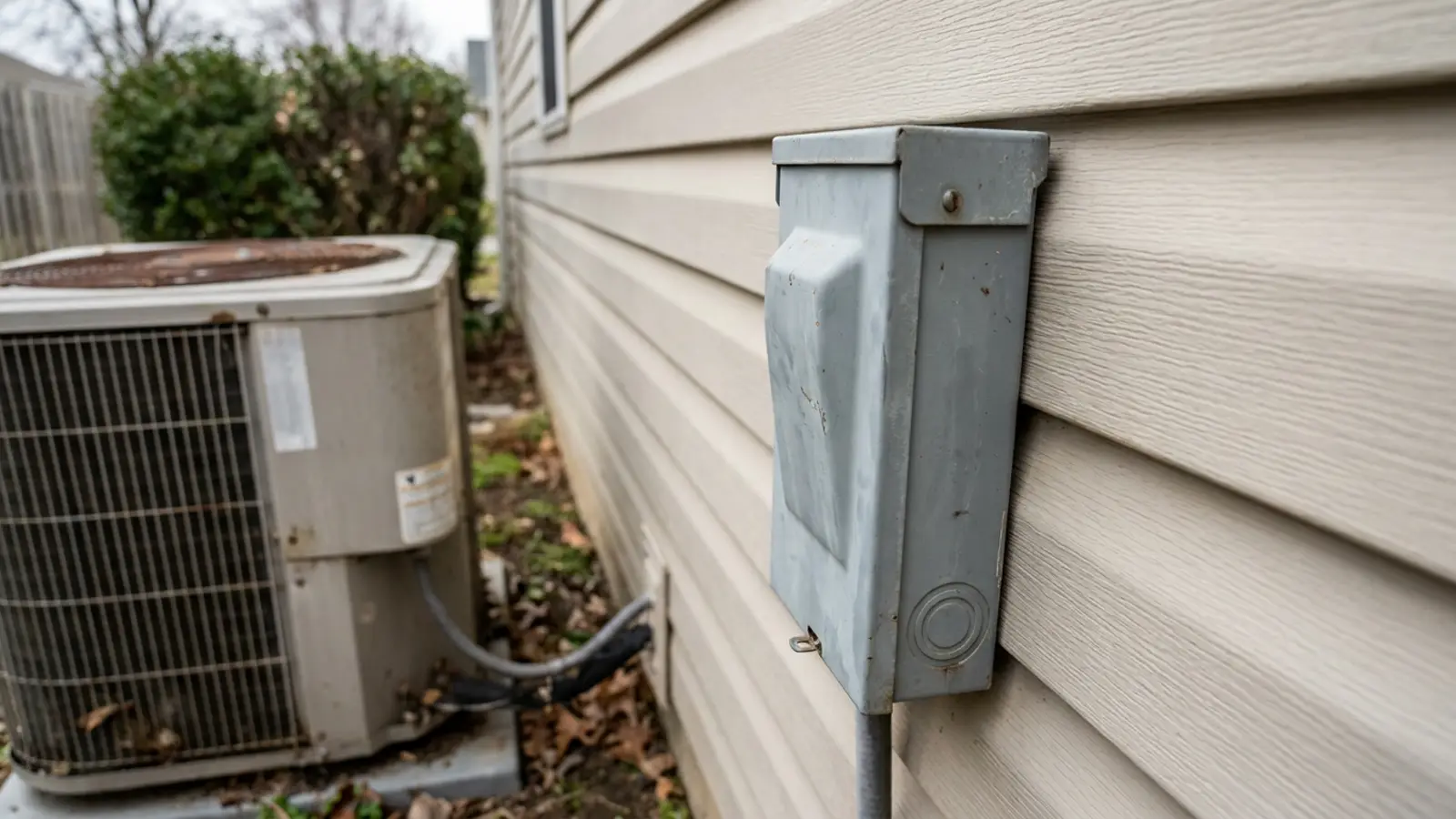
Standing at the unit, the sound it makes is the fastest diagnostic. Complete silence during a cooling call means no power or no control signal — check the disconnect and breaker. A steady hum with no fan and no compressor almost always means a failed run capacitor or a seized motor. A repeating click every few seconds is usually the contactor chattering from weak control voltage or a compressor trying to start and tripping its overload. A loud buzz suggests a contactor or a locked rotor. All of these except the breaker and disconnect require a technician.
Check these 3 things first
- 1Confirm the indoor blower is running during a cooling call.
- 2Walk to the outdoor unit and listen for any sound at all.
- 3Check the outdoor breaker and disconnect before assuming a part has failed.
How Serious Is This?
GREEN
Usually Manageable
Often resolved with basic homeowner checks and routine maintenance.
YELLOW — this issue's severity level
Inspection Recommended(this issue)
Worth a professional diagnosis soon to avoid a larger repair.
RED
Potentially Serious
Stop using the system and get professional help right away.
Most Likely Causes of an AC Unit Not Turning On
1. No line power at the unit
Tripped breaker, pulled disconnect, or blown fuses inside the disconnect box.
2. Failed run or start capacitor
The most common cause of a humming outdoor unit that will not start. Capacitors degrade with heat and age.
3. Burnt or chattering contactor
Pitted contacts or weak 24V control voltage prevents a solid connection and produces clicking.
4. Seized fan or compressor motor
A locked rotor draws high current, hums loudly, and trips on overload.
5. Open safety switch or lockout
High- or low-pressure switches, or a control board lockout after repeated faults, will prevent startup.
6. No 24V call reaching the unit
A broken thermostat wire, a tripped float switch, or a blown control fuse.
Safe Homeowner Checks for an AC Unit Not Turning On
- Listen carefully during a cooling call: silence, hum, click or buzz?
- Check the outdoor breaker and the disconnect pull-out.
- Look for obvious damage, scorch marks or insect nests around the cabinet.
- Confirm the indoor blower runs — that tells you the control circuit is alive.
- Do not open the electrical compartment or attempt to spin the fan by hand.
- Shut the system off if the unit is buzzing or hot.
Stop and get help if you notice
- • Loud buzzing lasting more than a few seconds.
- • Scorch marks or a burnt smell at the disconnect.
- • The cabinet becoming hot while not running.
2-Minute Tests for an AC Unit Not Turning On
Each test isolates one specific cause so you know what you are dealing with before anyone quotes you a repair. Stop immediately if anything feels unsafe.
Outdoor power confirmation
About 4 minutesTools: None
Tests for: No line power at the unit
- Confirm the indoor blower runs, which shows control power is present.
- Check the outdoor breaker in the panel for a trip.
- Open the outdoor disconnect cover and confirm the block is seated.
- Close the cover and start a cooling call again.
- Normal result
- The outdoor unit responds with a fan and compressor sound within seconds.
- Problem result
- The outdoor unit stays completely silent.
What it means: Silence with confirmed power at the disconnect points toward a failed contactor or a control-circuit break between the thermostat and the outdoor unit.
Indoor versus outdoor response comparison
About 3 minutesTools: None
Tests for: No 24V call reaching the unit
- Start a cooling call at the thermostat.
- Confirm the indoor blower starts moving air.
- Go outside within one minute and check whether the condenser has started.
- Normal result
- Both the indoor blower and the outdoor unit start within the same short window.
- Problem result
- The indoor blower runs but the outdoor unit never responds.
What it means: This isolates the fault to the outdoor unit's electrical components rather than the thermostat or air handler.
Recent fault history review
About 3 minutesTools: None
Tests for: Open safety switch or lockout
- Think back on whether the system has recently short-cycled or shut off on its own.
- Check the thermostat for any fault code or lockout message.
- Note if the outdoor unit was ever heard buzzing or clicking before going silent.
- Normal result
- No fault messages or unusual recent behavior.
- Problem result
- A fault code appears, or the unit had been cycling oddly before stopping.
What it means: A pressure switch or control-board lockout following repeated faults will hold the unit off until a technician clears the cause.
What Fixing an AC Unit Not Turning On Typically Costs
Capacitor replacement
- DIY
- Not a DIY repair
- Professional
- $150-$400
- Typical time
- 30-60 minutes
Contactor replacement
- DIY
- Not a DIY repair
- Professional
- $150-$350
- Typical time
- 30-60 minutes
Disconnect block repair
- DIY
- $0-$30 (reseating only)
- Professional
- $100-$250
- Typical time
- 20-40 minutes
Fan or compressor motor replacement
- DIY
- Not a DIY repair
- Professional
- $400-$1,800
- Typical time
- 1-3 hours
Pressure switch lockout diagnosis
- DIY
- Not a DIY repair
- Professional
- $150-$350 diagnostic
- Typical time
- 1 hour
| Problem | DIY cost | Professional cost | Typical time |
|---|---|---|---|
| Capacitor replacement | Not a DIY repair | $150-$400 | 30-60 minutes |
| Contactor replacement | Not a DIY repair | $150-$350 | 30-60 minutes |
| Disconnect block repair | $0-$30 (reseating only) | $100-$250 | 20-40 minutes |
| Fan or compressor motor replacement | Not a DIY repair | $400-$1,800 | 1-3 hours |
| Pressure switch lockout diagnosis | Not a DIY repair | $150-$350 diagnostic | 1 hour |
Ranges are national estimates for planning only. Local labor rates, equipment access and parts availability change what you will actually be quoted.
Working Through an AC Unit Not Turning On
Is the unit completely silent during a cooling call?
Yes: Check power at the breaker and disconnect first.
No: Continue.
Does it hum steadily without anything turning?
Yes: Likely a failed capacitor or a seized motor. Shut it off and call for service.
No: Continue.
Does it click repeatedly every few seconds?
Yes: Contactor chatter or overload cycling — needs professional diagnosis.
No: If the indoor blower also does not run, check indoor power and the control circuit.
What the technician will check
- Voltage at the disconnect, contactor line and load sides.
- Capacitor microfarad measurement.
- Contactor coil and contact condition.
- Motor winding resistance and locked-rotor testing.
- Pressure switch and lockout history.
Repair considerations
- • Capacitors and contactors are inexpensive and often replaced together.
- • Fan motors are moderate.
- • A locked compressor is typically the point where replacement is priced alongside repair.
What this actually means
The condensing unit has a small number of components between line voltage and a running compressor: the disconnect, the contactor, the capacitor, and the motors. Each fails with a characteristic sound. Reading those sounds converts a vague no-start into a specific likely part before anyone opens a panel.
When to Call an HVAC Professional About an AC Unit Not Turning On
- The unit hums, clicks or buzzes without starting.
- Power is confirmed and nothing happens.
- There is any burnt smell or scorch mark.
- The system has locked out repeatedly.
Preventing an AC Unit Not Turning On From Coming Back
- • Annual capacitor testing — they weaken before they fail outright.
- • Keep the cabinet clear and clean so components run cooler.
- • Address short cycling promptly; it stresses starting components.
Worth doing yourself
- • Reseat the outdoor disconnect after confirming power is off.
- • Reset the outdoor breaker once.
- • Clear debris and vegetation from around the cabinet.
- • Confirm the indoor blower runs so you can report accurate symptoms to a technician.
Do not waste money on
- • Opening the outdoor electrical compartment to inspect the contactor or capacitor yourself.
- • Trying to spin the outdoor fan blade by hand to 'help it start'.
- • Continuing to reset breakers on a unit that hums or buzzes.
Related Problems: AC Unit Not Turning On
- YELLOW — Inspection RecommendedAC Won't StartWhy Is My AC Not Turning On?Read this next if nothing happens when the thermostat calls — focus on the power and control chain from breaker to contactor.View answer
- YELLOW — Inspection RecommendedAC Won't StartWhy Is My AC Compressor Not Turning On?Read this next if the compressor specifically will not start while other parts of the system may operate — component-level diagnosis.View answer
- YELLOW — Inspection RecommendedAC Won't StartWhy Is My AC Fan Not Turning On?Read this next if a fan is not spinning — page must first distinguish the indoor blower from the outdoor condenser fan, since they fail differently.View answer
- YELLOW — Inspection RecommendedAC Won't StartWhy Is My AC Not Kicking On?Read this next if the system fails to start when it should — often intermittently or with a delay — emphasising timing, delays and cycle-start behaviour.View answer
- YELLOW — Inspection RecommendedAC Not CoolingWhy Is My AC Unit Not Blowing Cold Air?Read this next if focus on the AC equipment itself — indoor air handler and outdoor condenser hardware — rather than on the vent experience.View answer
- YELLOW — Inspection RecommendedAC Won't StartWhy Is My AC Not Working?Read this next if broadest possible failure phrasing — visitor has not characterized the symptom, so the page must triage before it diagnoses.View answer
- All AC Won't Start problemsBrowse category
Frequently Asked Questions About an AC Unit Not Turning On
Guidance this page draws on
- ACCA — Component-level fault isolation for residential condensing units.
- HVAC manufacturer service literature — Contactor and capacitor specifications by model.