
Why Is My AC Not Working?
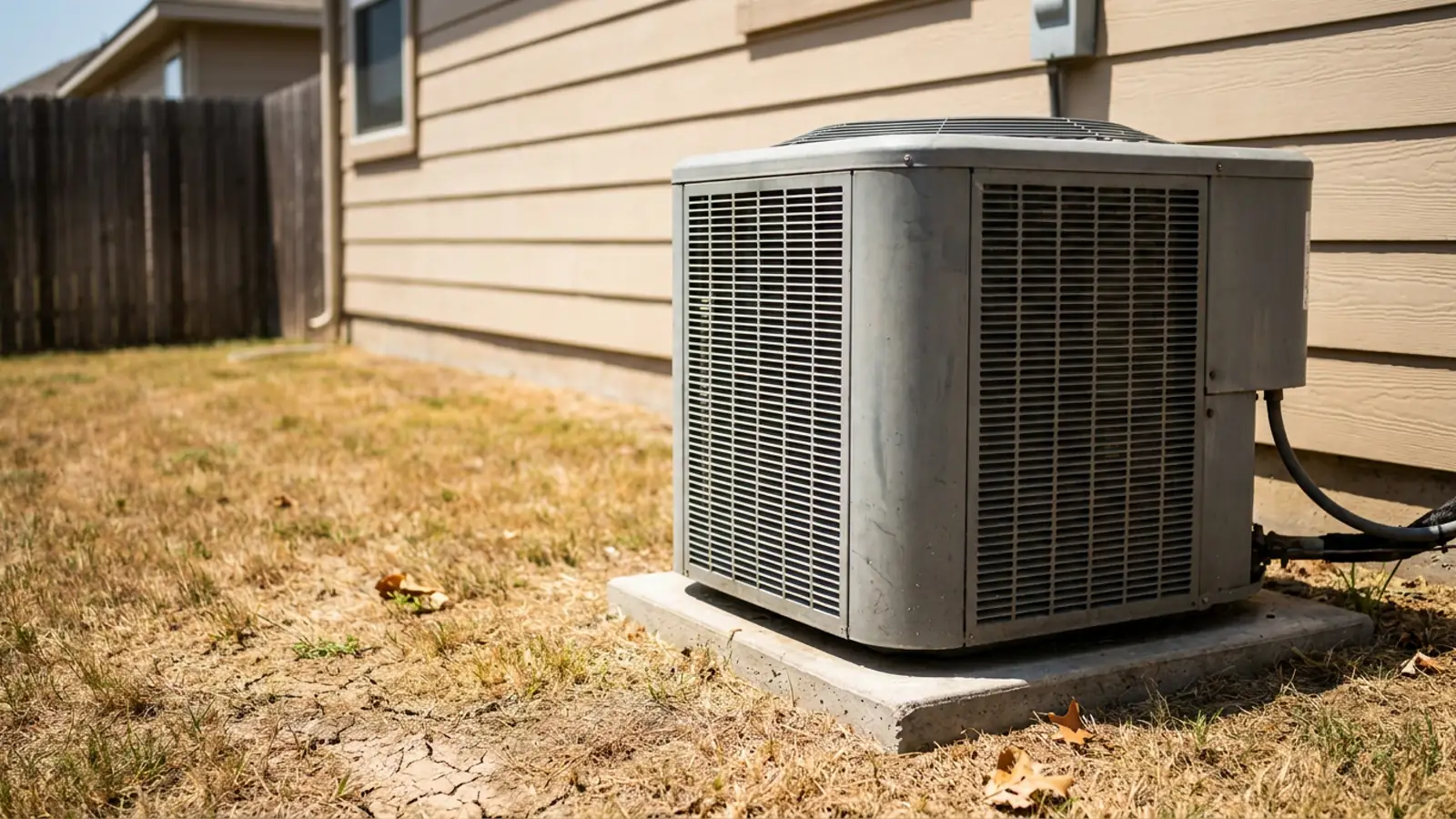
Causes, safe checks and when to call a professional
Expert Answer: AC Not Working
Start by classifying the failure, because "not working" covers four different problems with four different fixes. Is the thermostat display blank? That is a power or control problem. Does nothing at all happen when you lower the setpoint? Power, thermostat or control wiring. Does the indoor unit run but the outdoor unit stay silent? That is an outdoor electrical fault. Does everything run but the air is not cold? That is a refrigeration problem. Check the thermostat batteries, both breakers and the air handler service switch first — those three account for a surprising share of no-cooling calls.
Check these 3 things first
- 1Look at the thermostat display for a blank screen versus a lit one.
- 2Listen for the indoor blower running when you drop the setpoint.
- 3Walk outside and check whether the condenser is running at all.
How Serious Is This?
GREEN
Usually Manageable
Often resolved with basic homeowner checks and routine maintenance.
YELLOW — this issue's severity level
Inspection Recommended(this issue)
Worth a professional diagnosis soon to avoid a larger repair.
RED
Potentially Serious
Stop using the system and get professional help right away.
Most Likely Causes of an AC Not Working
1. Tripped breaker or blown fuse
Systems typically have separate breakers for the indoor and outdoor equipment; either can trip independently.
2. Thermostat power or failure
Dead batteries, a tripped condensate float switch cutting the 24V circuit, or a failed thermostat leaves the equipment with no call.
3. Air handler service switch turned off
The switch beside the indoor unit looks like a light switch and is easily switched off during other work.
4. Blown low-voltage fuse or failed transformer
A short in the thermostat wiring commonly blows the control-board fuse, killing the whole system.
5. Condensate float switch tripped
A full drain pan opens the control circuit and shuts the system down deliberately.
6. Failed capacitor or contactor outdoors
The blower runs, the compressor does not, and the house never cools.
7. Compressor or motor failure
Hard component failures stop the system entirely and require diagnosis.
Safe Homeowner Checks for an AC Not Working
- Check the thermostat display — blank means a power or control-circuit problem.
- Replace thermostat batteries.
- Check both AC-related breakers in the panel; reset once only.
- Verify the air handler service switch is ON.
- Check the outdoor disconnect pull-out is seated.
- Look for standing water in the drain pan that could have tripped a float switch.
- Set the thermostat to COOL and lower the setpoint five degrees, then listen for equipment.
Stop and get help if you notice
- • Breaker that trips again after reset — stop and call for service.
- • Burning smell at the indoor or outdoor unit.
- • Buzzing or crackling from electrical equipment.
2-Minute Tests for an AC Not Working
Each test isolates one specific cause so you know what you are dealing with before anyone quotes you a repair. Stop immediately if anything feels unsafe.
Breaker panel check
About 5 minutesTools: None
Tests for: Tripped breaker or blown fuse
- Open the electrical panel and find the AC breakers.
- Look for a breaker sitting in a middle, off-tilted position.
- Switch it fully off, then fully on, one time only.
- Return to the thermostat and start a cooling call.
- Normal result
- The breaker stays firmly in the on position and equipment runs.
- Problem result
- The breaker trips again within seconds of resetting.
What it means: A breaker that re-trips indicates a genuine electrical fault, not a nuisance trip, and needs a technician rather than another reset.
Thermostat display test
About 3 minutesTools: Fresh AA or AAA batteries
Tests for: Thermostat power or failure
- Check whether the thermostat screen shows anything.
- Replace the batteries even if the screen looks lit.
- Confirm the mode is set to COOL, not OFF or HEAT.
- Lower the setpoint five degrees below room temperature.
- Normal result
- The display lights up and shows a cooling call or a countdown.
- Problem result
- The screen stays blank after fresh batteries.
What it means: A blank screen after new batteries points to a blown control fuse, a dead transformer, or an open safety switch feeding the thermostat.
Drain pan inspection
About 5 minutesTools: Flashlight
Tests for: Condensate float switch tripped
- Locate the indoor air handler and find the secondary drain pan beneath it.
- Shine a light into the pan and look for standing water.
- Check the small float switch clipped to the pan or the drain line.
- If water is present, note it and plan to clear the drain line.
- Normal result
- The pan is dry and the float switch sits low.
- Problem result
- Water sits in the pan and the float has risen.
What it means: A full pan has deliberately opened the control circuit to prevent overflow, and the system will not run until the water is cleared.
Service switch verification
About 2 minutesTools: None
Tests for: Air handler service switch turned off
- Find the switch mounted on or near the indoor air handler cabinet.
- Confirm it is flipped to the ON position.
- Flip it off and on once if it looks ambiguous.
- Normal result
- The switch is up and firmly in the on position.
- Problem result
- The switch was down or loose.
What it means: This switch is often bumped or intentionally shut off during attic or closet work and simply forgotten.
What Fixing an AC Not Working Typically Costs
Thermostat batteries
- DIY
- $5-$15
- Professional
- N/A
- Typical time
- 5 minutes
Air filter replacement
- DIY
- $15-$40
- Professional
- Included in maintenance visits
- Typical time
- 10 minutes
Thermostat replacement
- DIY
- $25-$150
- Professional
- $150-$350 installed
- Typical time
- 30-60 minutes
Capacitor replacement
- DIY
- Not a DIY repair
- Professional
- $150-$400
- Typical time
- 30-60 minutes
Contactor replacement
- DIY
- Not a DIY repair
- Professional
- $150-$350
- Typical time
- 30-60 minutes
Control board or transformer
- DIY
- Not a DIY repair
- Professional
- $250-$650
- Typical time
- 1-2 hours
| Problem | DIY cost | Professional cost | Typical time |
|---|---|---|---|
| Thermostat batteries | $5-$15 | N/A | 5 minutes |
| Air filter replacement | $15-$40 | Included in maintenance visits | 10 minutes |
| Thermostat replacement | $25-$150 | $150-$350 installed | 30-60 minutes |
| Capacitor replacement | Not a DIY repair | $150-$400 | 30-60 minutes |
| Contactor replacement | Not a DIY repair | $150-$350 | 30-60 minutes |
| Control board or transformer | Not a DIY repair | $250-$650 | 1-2 hours |
Ranges are national estimates for planning only. Local labor rates, equipment access and parts availability change what you will actually be quoted.
Working Through an AC Not Working
Does the thermostat have a display?
Yes: Control power exists — continue.
No: Check batteries, the float switch and the low-voltage fuse or transformer.
Does the indoor blower run when you call for cooling?
Yes: Indoor power is fine — focus on the outdoor unit.
No: Check the air handler breaker and service switch.
Does the outdoor unit run?
Yes: Both halves run — this is a refrigeration or airflow performance problem.
No: Check the outdoor breaker and disconnect, then call for electrical diagnosis.
What the technician will check
- Line and low-voltage power verification.
- Control board, fuse and transformer testing.
- Float switch and safety circuit continuity.
- Capacitor, contactor and motor testing.
- Refrigerant charge if the system runs without cooling.
Repair considerations
- • Fuses, batteries, float switches and capacitors are inexpensive repairs.
- • Control boards and ECM motors are mid-range.
- • Compressor failure on older equipment usually prompts a replacement comparison.
What this actually means
Every air conditioning failure lives in one of four layers: power, controls, air movement, or refrigeration. Working through them in order is faster than guessing, and it tells you immediately whether the next step is a five-minute homeowner fix or a service call.
When to Call an HVAC Professional About an AC Not Working
- The breaker trips repeatedly.
- The thermostat is dead after new batteries.
- The outdoor unit will not start with power confirmed.
- Everything runs but there is no cooling.
- There is any burning smell or unusual electrical noise.
Preventing an AC Not Working From Coming Back
- • Replace thermostat batteries annually.
- • Flush the condensate drain each season so the float switch never trips.
- • Have electrical components tested during maintenance.
Worth doing yourself
- • Replace thermostat batteries every year.
- • Reset a tripped breaker once and monitor.
- • Flip the air handler service switch back on.
- • Clear a visibly clogged condensate line to reset the float switch.
- • Replace a dirty filter that may be part of a broader shutdown.
Do not waste money on
- • Repeatedly resetting a breaker that keeps tripping.
- • Opening the outdoor electrical compartment yourself.
- • Assuming a thermostat replacement will fix a wiring short.
Related Problems: AC Not Working
- YELLOW — Inspection RecommendedAC Won't StartWhy Is My AC Not Turning On?Read this next if nothing happens when the thermostat calls — focus on the power and control chain from breaker to contactor.View answer
- YELLOW — Inspection RecommendedAC Won't StartWhy Is My AC Not Kicking On?Read this next if the system fails to start when it should — often intermittently or with a delay — emphasising timing, delays and cycle-start behaviour.View answer
- YELLOW — Inspection RecommendedAC Won't StartWhy Is My AC Unit Not Turning On?Read this next if the equipment cabinet itself will not start — visitor is standing at the outdoor condenser or air handler observing hardware behaviour.View answer
- YELLOW — Inspection RecommendedAC Not CoolingWhy Is My AC Not Blowing Cold Air?Read this next if air is moving from the supply registers but it is not noticeably cold at the vent.View answer
- YELLOW — Inspection RecommendedAC Not CoolingWhy Is My AC Not Cooling?Read this next if general residential AC cooling failure with no specific symptom named yet.View answer
- YELLOW — Inspection RecommendedAC Not CoolingWhy Is My AC Not Blowing Air?Read this next if no air movement at all at the registers — an airflow and blower problem rather than a temperature problem.View answer
- All AC Won't Start problemsBrowse category
Frequently Asked Questions About an AC Not Working
Guidance this page draws on
- U.S. Department of Energy — Guidance on routine homeowner maintenance and thermostat operation.
- ACCA — Industry standards for residential HVAC system diagnostics.
- CPSC — Electrical panel and breaker safety guidance.