
Why Is My AC Smoking?
Causes, safe checks and when to call a professional
Safety first — treat this as urgent
Shut the system off at the thermostat and breaker. If you see fire, smell burning, or suspect a gas leak, leave the building and call 911 before anything else.
Expert Answer: AC Smoking
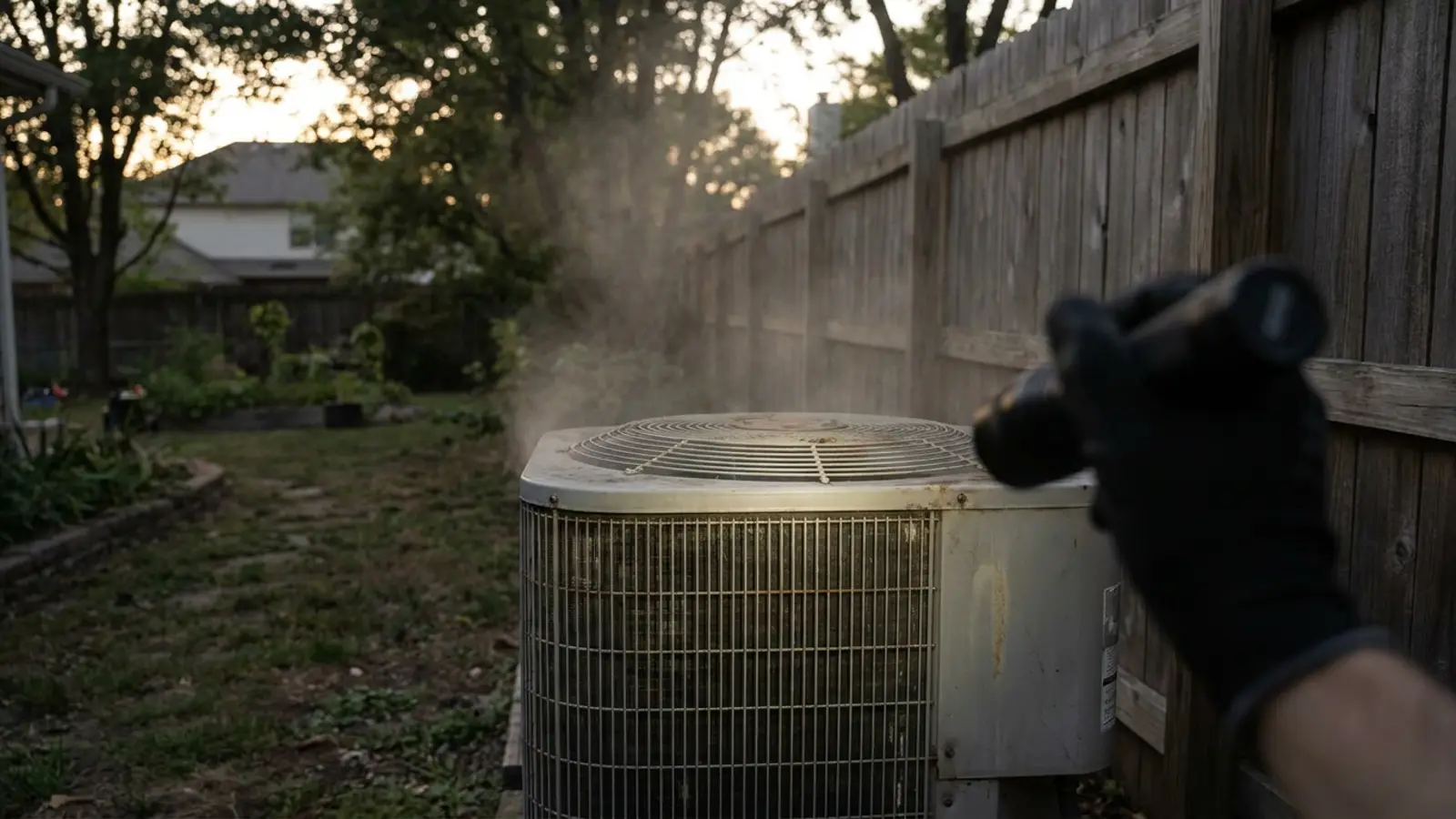
Smoke coming from the equipment cabinet means a component is overheating right now. Turn the system off at the thermostat and at the breaker if you can reach it safely, and keep clear of the unit. If you see flame or sparking, or the smoke is heavy, leave the area and contact emergency services. The typical sources are a failing motor, arcing or overheating electrical connections, a seized bearing, or a wiring fault. Do not restart the system to test it — an electrical fault that has already produced smoke can escalate quickly.
Check these 3 things first
- 1Shut the system off at the thermostat immediately.
- 2Turn off the AC breaker at the panel if you can reach it safely.
- 3Keep clear of the unit and watch from a distance for flame or sparking.
How Serious Is This?
GREEN
Usually Manageable
Often resolved with basic homeowner checks and routine maintenance.
YELLOW
Inspection Recommended
Worth a professional diagnosis soon to avoid a larger repair.
RED — this issue's severity level
Potentially Serious(this issue)
Stop using the system and get professional help right away.
Most Likely Causes of an AC Smoking
1. Motor failure
Blower or fan motor windings overheating produce smoke and a sharp electrical odor.
2. Arcing electrical connection
A loose lug or failing contactor can arc, melt insulation and smoke.
3. Seized bearing
Friction heat from a failing bearing can smoke and smells hot and metallic.
4. Shorted wiring
Rodent damage or chafed insulation creates a short that burns.
5. Overloaded compressor
A compressor drawing excessive current can overheat its terminals and wiring.
6. Debris burning inside the cabinet
Leaves and dust contacting hot components can smolder.
Safe Homeowner Checks for an AC Smoking
- Shut the system OFF at the thermostat now.
- Turn off the AC breaker at the panel if you can do so safely and dryly.
- Keep clear of the unit — do not open panels.
- Check for flame or sparking from a safe distance; if present, evacuate and call emergency services.
- Confirm smoke alarms are working.
- Do not restart the system for any reason before inspection.
Stop and get help if you notice
- • Flame, sparks or arcing.
- • Smoke continuing after shutdown.
- • Melted or discolored components.
- • Breaker tripping alongside the smoke.
2-Minute Tests for an AC Smoking
Each test isolates one specific cause so you know what you are dealing with before anyone quotes you a repair. Stop immediately if anything feels unsafe.
Observe cabinet from a distance
About 3 minutesTools: None
Tests for: Motor failure
- Shut off power at the thermostat and breaker first.
- Stand a safe distance from the cabinet.
- Look for continuing smoke or a sharp electrical smell.
- Do not approach closer or open any panel.
- Normal result
- Smoke and odor stop shortly after power is cut.
- Problem result
- Smoke continues or intensifies after shutdown.
What it means: Smoke that continues after power is removed is a more serious fault and warrants leaving the area and calling for help.
Check the breaker status
About 2 minutesTools: None
Tests for: Arcing electrical connection
- Go to the electrical panel from a safe route.
- Check whether the AC breaker has already tripped.
- Leave it off regardless of its position.
- Do not attempt to reset it before an inspection.
- Normal result
- The breaker tripped on its own, cutting power automatically.
- Problem result
- The breaker did not trip despite visible smoke.
What it means: A breaker that fails to trip during an electrical fault suggests a wiring problem beyond normal overcurrent protection.
Post-shutdown odor check
About 3 minutesTools: None
Tests for: Debris burning inside the cabinet
- Wait a few minutes after shutting the system off.
- From a safe distance, note whether the smell is dusty versus acrid or metallic.
- Check whether it was the unit's first run of the season.
- Do not open the cabinet to inspect further yourself.
- Normal result
- A brief dusty smell fades quickly with no smoke.
- Problem result
- A metallic, hot or acrid smell persists.
What it means: Debris burn-off is brief and dust-like; a persistent acrid or metallic smell points to an electrical or bearing fault instead.
What Fixing an AC Smoking Typically Costs
Emergency electrical inspection
- DIY
- Not a DIY task
- Professional
- $100-$300
- Typical time
- 1-2 hours
Motor or wiring replacement
- DIY
- Not a DIY repair
- Professional
- $300-$900
- Typical time
- 1-3 hours
Compressor terminal repair
- DIY
- Not a DIY repair
- Professional
- $400-$1,200
- Typical time
- 1-3 hours
Equipment replacement after major electrical damage
- DIY
- Not a DIY task
- Professional
- $4,000-$9,000+
- Typical time
- 1 day
| Problem | DIY cost | Professional cost | Typical time |
|---|---|---|---|
| Emergency electrical inspection | Not a DIY task | $100-$300 | 1-2 hours |
| Motor or wiring replacement | Not a DIY repair | $300-$900 | 1-3 hours |
| Compressor terminal repair | Not a DIY repair | $400-$1,200 | 1-3 hours |
| Equipment replacement after major electrical damage | Not a DIY task | $4,000-$9,000+ | 1 day |
Ranges are national estimates for planning only. Local labor rates, equipment access and parts availability change what you will actually be quoted.
Working Through an AC Smoking
Is there flame, sparking or heavy smoke?
Yes: Leave the area and contact emergency services.
No: Continue.
Can you safely shut off the breaker?
Yes: Do so, and leave the system off until inspected.
No: Shut it off at the thermostat and keep clear.
Has the smoke stopped after shutdown?
Yes: Leave the power off and schedule an urgent professional inspection.
No: Treat it as an emergency.
What the technician will check
- Complete electrical safety inspection before restoring power.
- Motor insulation resistance and winding condition.
- Wiring, terminal block and contactor condition.
- Bearing and mechanical friction inspection.
- Compressor terminal and amp draw evaluation.
Repair considerations
- • Components that overheated should be replaced, not reused.
- • Wiring harness damage often extends past the visible burn.
- • If the compressor terminals or major wiring burned, replacement may be more appropriate than repair on older equipment.
What this actually means
Unlike smoke at the vents, which can occasionally be harmless condensation, smoke at the cabinet is essentially always a fault. Something inside is hot enough to burn insulation, lubricant or dust. The correct sequence is shut down, keep clear, then diagnose — never diagnose while it runs.
When to Call an HVAC Professional About an AC Smoking
- The unit produced any smoke at all.
- You see scorching, melting or discoloration.
- The breaker tripped along with the smoke.
- You are unsure whether the system is safe.
Preventing an AC Smoking From Coming Back
- • Annual electrical inspection and connection tightening.
- • Proactive replacement of aging capacitors and contactors.
- • Rodent and pest control around equipment and line sets.
- • Keep cabinets clean and clear of combustible debris.
Worth doing yourself
- • Shut the system off at the thermostat and breaker without delay.
- • Keep clear of the unit and avoid opening any panels.
- • Confirm smoke alarms near the equipment are working.
- • Leave the system powered off until a technician inspects it.
Do not waste money on
- • Do not restart the system for any reason before inspection.
- • Do not attempt to identify the exact fault yourself by opening the cabinet.
- • Do not ignore a tripped breaker paired with smoke as a one-time fluke.
Related Problems: AC Smoking
- RED — Potentially SeriousAC Operation ProblemsWhy Is My AC Blowing Smoke?Read this next if smoke or smoke-like vapour observed coming out of the vents or the unit — safety triage must come before any diagnosis or service referral.View answer
- YELLOW — Inspection RecommendedAC Not CoolingWhy Is My AC Hot?Read this next if the equipment itself feels hot to the touch or the visitor is describing a hot unit rather than hot vent air.View answer
- YELLOW — Inspection RecommendedAC NoisesWhy Is My AC Making a Loud Noise?Read this next if a sudden loud sound rather than gradually rising volume — the visitor needs a stop-or-continue decision immediately.View answer
- YELLOW — Inspection RecommendedAC Won't StartWhy Is My AC Not Working?Read this next if broadest possible failure phrasing — visitor has not characterized the symptom, so the page must triage before it diagnoses.View answer
- YELLOW — Inspection RecommendedAC Won't StartWhy Is My AC Unit Not Turning On?Read this next if the equipment cabinet itself will not start — visitor is standing at the outdoor condenser or air handler observing hardware behaviour.View answer
- YELLOW — Inspection RecommendedAC Won't StartWhy Is My AC Compressor Not Turning On?Read this next if the compressor specifically will not start while other parts of the system may operate — component-level diagnosis.View answer
- All AC Operation Problems problemsBrowse category
Frequently Asked Questions About an AC Smoking
Guidance this page draws on
- CPSC — Guidance on appliance fire hazard response and evacuation.
- HVAC manufacturer service literature — Compressor terminal and motor winding failure indicators.
- NATE — Post-fault electrical inspection standards before restoring equipment to service.