
Why Is My AC Not Working in My Car?
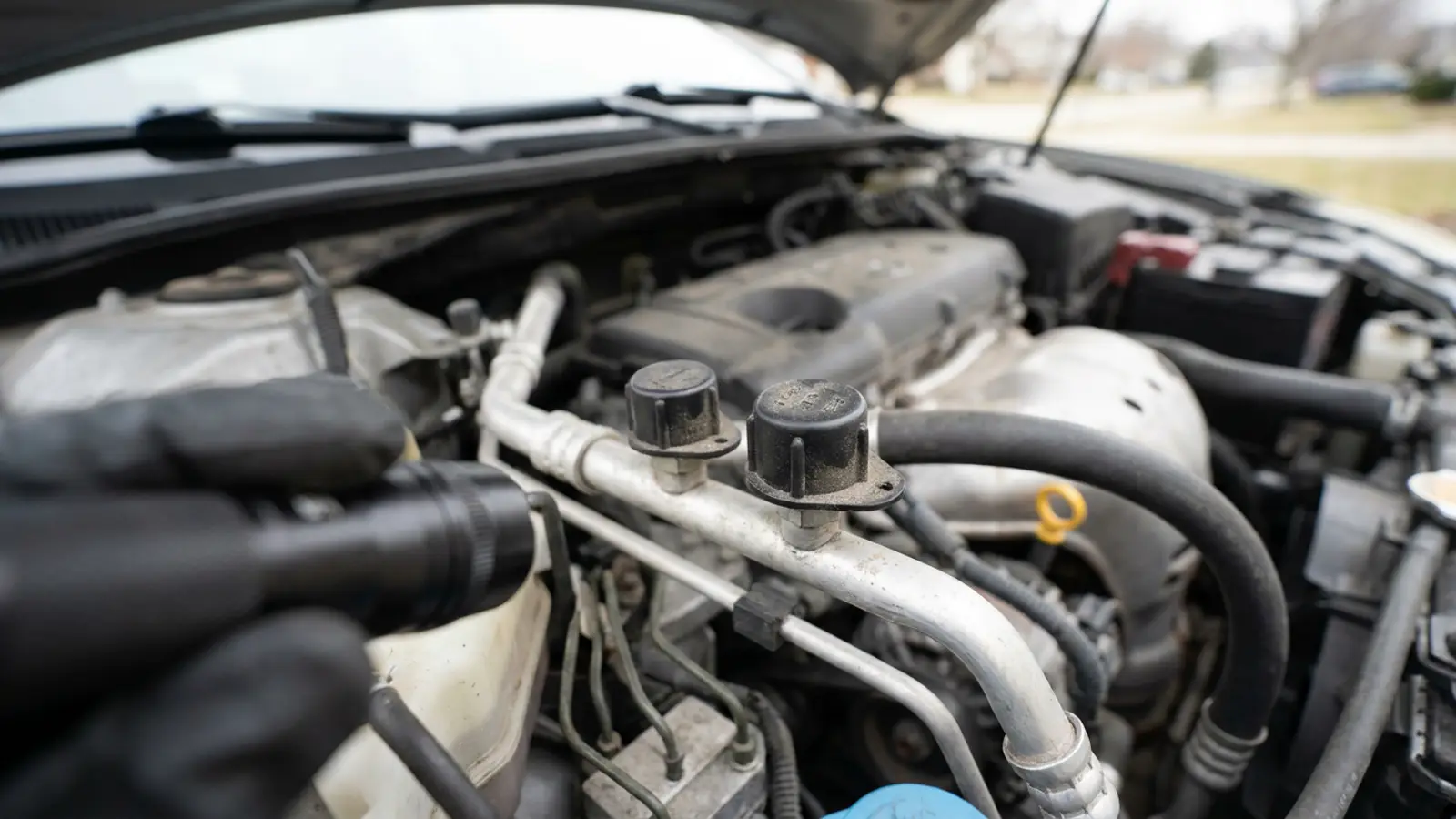
Causes, safe checks and when to call a professional
Expert Answer: AC Not Working in My Car
Classify the failure before chasing parts. No air at the vents is a blower problem — fuse, resistor, motor or cabin filter. Air but no cold is a refrigeration problem — low charge, compressor clutch, condenser or cooling fan. Hot air specifically suggests a blend door blending in heater core air. Nothing happening at all when you press the A/C button points to a fuse, relay or control fault. Start by turning the fan to high and listening, then look at whether the compressor clutch engages.
Check these 3 things first
- 1Fan on high: is there airflow at the vents?
- 2A/C on max: does the compressor clutch engage?
- 3Compare cooling at idle versus highway speed.
How Serious Is This?
GREEN — this issue's severity level
Usually Manageable(this issue)
Often resolved with basic homeowner checks and routine maintenance.
YELLOW
Inspection Recommended
Worth a professional diagnosis soon to avoid a larger repair.
RED
Potentially Serious
Stop using the system and get professional help right away.
Most Likely Causes of an AC Not Working in My Car
1. Low refrigerant from a leak
The single most common cause of a car A/C that stops cooling.
2. Blower motor, resistor or fuse failure
Produces no airflow at all, or airflow only on certain speeds.
3. Compressor clutch not engaging
Often triggered by the low-pressure cutout rather than a failed clutch.
4. Condenser blockage or cooling fan failure
Cooling works at speed but fails at idle.
5. Blend door actuator failure
Hot air regardless of A/C operation.
6. Electrical faults
Fuses, relays, wiring and control module issues can disable the system entirely.
7. Clogged cabin air filter
Weak airflow and reduced cooling from a simple maintenance item.
Safe Checks for an AC Not Working in My Car
- Fan on high: is there airflow at the vents?
- A/C on max: does the compressor clutch engage?
- Check the cabin air filter.
- Check A/C fuses and relays.
- Look through the grille for a blocked condenser.
- Compare cooling at idle versus highway speed.
- Never open a pressurized A/C line or attempt refrigerant service yourself.
- Keep hands and tools clear of belts, pulleys and fans whenever the engine is running.
Stop and get help if you notice
- • Grinding or squealing when the A/C engages.
- • Burning smells from the vents or engine bay.
- • Engine overheating with A/C on.
2-Minute Tests for an AC Not Working in My Car
Each test isolates one specific cause so you know what you are dealing with before anyone quotes you a repair. Stop immediately if anything feels unsafe.
Compressor cycling check
About 3 minutesTools: None
Tests for: Low refrigerant from a leak
- Start the engine and set the A/C to max cold with the fan on high.
- Watch the compressor clutch for the next two minutes.
- Note whether it engages once and stays on, or clicks on and off repeatedly.
- Normal result
- The clutch engages once and stays engaged.
- Problem result
- The clutch cycles on and off every few seconds.
What it means: Fast cycling suggests low refrigerant charge tripping the pressure cutout.
Fan speed sweep
About 2 minutesTools: None
Tests for: Blower motor, resistor or fuse failure
- Turn the ignition on.
- Cycle through every fan speed from low to high.
- Note whether airflow changes with each step or only appears at one setting.
- Normal result
- Airflow increases with every step of the fan switch.
- Problem result
- Airflow appears only at the highest setting, or not at all.
What it means: This pattern narrows the problem to the blower resistor, motor, or a fuse rather than the refrigeration side.
Clutch hub observation
About 2 minutesTools: None
Tests for: Compressor clutch not engaging
- With the engine running and A/C on max, locate the compressor pulley.
- Watch the center hub for one to two minutes.
- Note whether it spins with the outer pulley.
- Normal result
- The center hub locks up and spins with the pulley.
- Problem result
- The outer pulley spins but the center hub stays still.
What it means: A non-engaging clutch points to low charge, an electrical fault, or a failed clutch rather than an airflow issue.
Temperature sweep and listen
About 2 minutesTools: None
Tests for: Blend door actuator failure
- Set the temperature dial to full cold, then to full hot.
- Listen behind the dash for actuator movement or clicking each time.
- Note whether vent temperature actually changes between settings.
- Normal result
- You hear brief actuator movement and feel a real temperature change.
- Problem result
- You hear repeated clicking with no change in vent temperature.
What it means: This is a common sign of a blend door actuator stuck or slipping regardless of the refrigeration system's condition.
What Fixing an AC Not Working in My Car Typically Costs
Cabin air filter
- DIY
- $15-$35
- Professional
- $40-$80
- Typical time
- 10-20 min
Fuse or relay replacement
- DIY
- $10-$30
- Professional
- $40-$100
- Typical time
- 15-30 min
Blower resistor or module replacement
- DIY
- $25-$90 parts if accessible
- Professional
- $120-$350
- Typical time
- 0.5-1.5 hrs
Leak diagnosis and recharge
- DIY
- Not a DIY repair
- Professional
- $150-$350
- Typical time
- 1-2 hrs
Compressor replacement
- DIY
- Not a DIY repair
- Professional
- $550-$1,600
- Typical time
- 2-5 hrs
| Problem | DIY cost | Professional cost | Typical time |
|---|---|---|---|
| Cabin air filter | $15-$35 | $40-$80 | 10-20 min |
| Fuse or relay replacement | $10-$30 | $40-$100 | 15-30 min |
| Blower resistor or module replacement | $25-$90 parts if accessible | $120-$350 | 0.5-1.5 hrs |
| Leak diagnosis and recharge | Not a DIY repair | $150-$350 | 1-2 hrs |
| Compressor replacement | Not a DIY repair | $550-$1,600 | 2-5 hrs |
Ranges are national estimates for planning only. Local labor rates, equipment access and parts availability change what you will actually be quoted.
Working Through an AC Not Working in My Car
Is there airflow from the vents?
Yes: Move to the cooling side.
No: Blower circuit: fuse, resistor, motor or filter.
Does the compressor clutch engage?
Yes: Suspect charge level, condenser airflow or blend doors.
No: Suspect low charge, fuse, relay or clutch.
Is the air actually hot rather than just uncooled?
Yes: Suspect a blend door actuator.
No: Have the system pressure-tested.
What the technician will check
- System pressure readings and leak detection.
- Blower circuit and resistor testing.
- Clutch, relay and fuse verification.
- Condenser airflow and fan operation.
- HVAC module scan for actuator and sensor codes.
Repair considerations
- • Diagnosis first: recharging a leaking system is money spent twice.
- • Compressor replacement generally includes flush and drier replacement.
- • R-1234yf systems cost more to service than older R-134a systems.
What this actually means
Automotive A/C has the same three layers as any climate system: electrical control, air movement and refrigeration. Because they fail independently, identifying the layer first eliminates most of the possible causes immediately and tells you whether you need an A/C specialist or a general repair shop.
When to Call an Automotive AC Technician About an AC Not Working in My Car
- Basic checks do not identify the layer.
- The compressor clutch will not engage.
- You suspect a refrigerant leak.
- There is any grinding, squealing or burning smell.
Preventing an AC Not Working in My Car From Coming Back
- • Run the A/C regularly year-round.
- • Replace the cabin filter on schedule.
- • Keep the condenser clear and the cooling system healthy.
Worth doing yourself
- • Replace a dirty cabin air filter behind the glovebox.
- • Check A/C fuses and relays against the owner's manual diagram.
- • Clear debris from the front of the condenser.
- • Classify whether the problem is airflow, cooling, or electrical before spending on parts.
Do not waste money on
- • Buying parts before classifying which layer of the system has failed — airflow, cooling, or control.
- • Repeated DIY recharge cans without a leak diagnosis.
- • Ignoring grinding, squealing, or burning smells while continuing to run the A/C.
Related Problems: AC Not Working in My Car
- GREEN — Usually ManageableCar ACWhy Is My AC Not Blowing Cold Air in My Car?Read this next if vehicle A/C moves air through the dash vents but the air is not cold — automotive refrigerant, compressor clutch and condenser diagnosis.View answer
- GREEN — Usually ManageableCar ACWhy Is My AC Not Blowing Air in My Car?Read this next if no air movement from the dash vents at all — blower motor, resistor, fuse and cabin filter diagnosis rather than a refrigerant issue.View answer
- GREEN — Usually ManageableCar ACWhy Is My AC Blowing Hot Air in My Car?Read this next if vehicle vents deliver genuinely hot air, implicating heater core blending and blend door position as much as the refrigeration loop.View answer
- GREEN — Usually ManageableCar ACWhy Is My AC Compressor Not Turning On in My Car?Read this next if the vehicle compressor clutch will not engage — low-pressure cutout, clutch coil, relay and control-side electrical diagnosis.View answer
- GREEN — Usually ManageableCar ACWhy Is My AC Not Turning On in My Car?Read this next if pressing the A/C button produces no response at all — control head, fuse, relay and request-signal diagnosis rather than cooling performance.View answer
- GREEN — Usually ManageableCar ACWhy Is My AC Squealing in My Car?Read this next if high-pitched squeal when the vehicle A/C engages — serpentine belt, tensioner, clutch and compressor bearing diagnosis.View answer
- All Car AC problemsBrowse category
Frequently Asked Questions About an AC Not Working in My Car
Guidance this page draws on
- vehicle manufacturer service literature — general A/C system layout and fault isolation procedures
- U.S. EPA — refrigerant handling and leak repair guidance
- automotive A/C service equipment documentation — diagnostic sequencing for airflow, cooling, and electrical faults