
Why Is My AC Squealing in My Car?
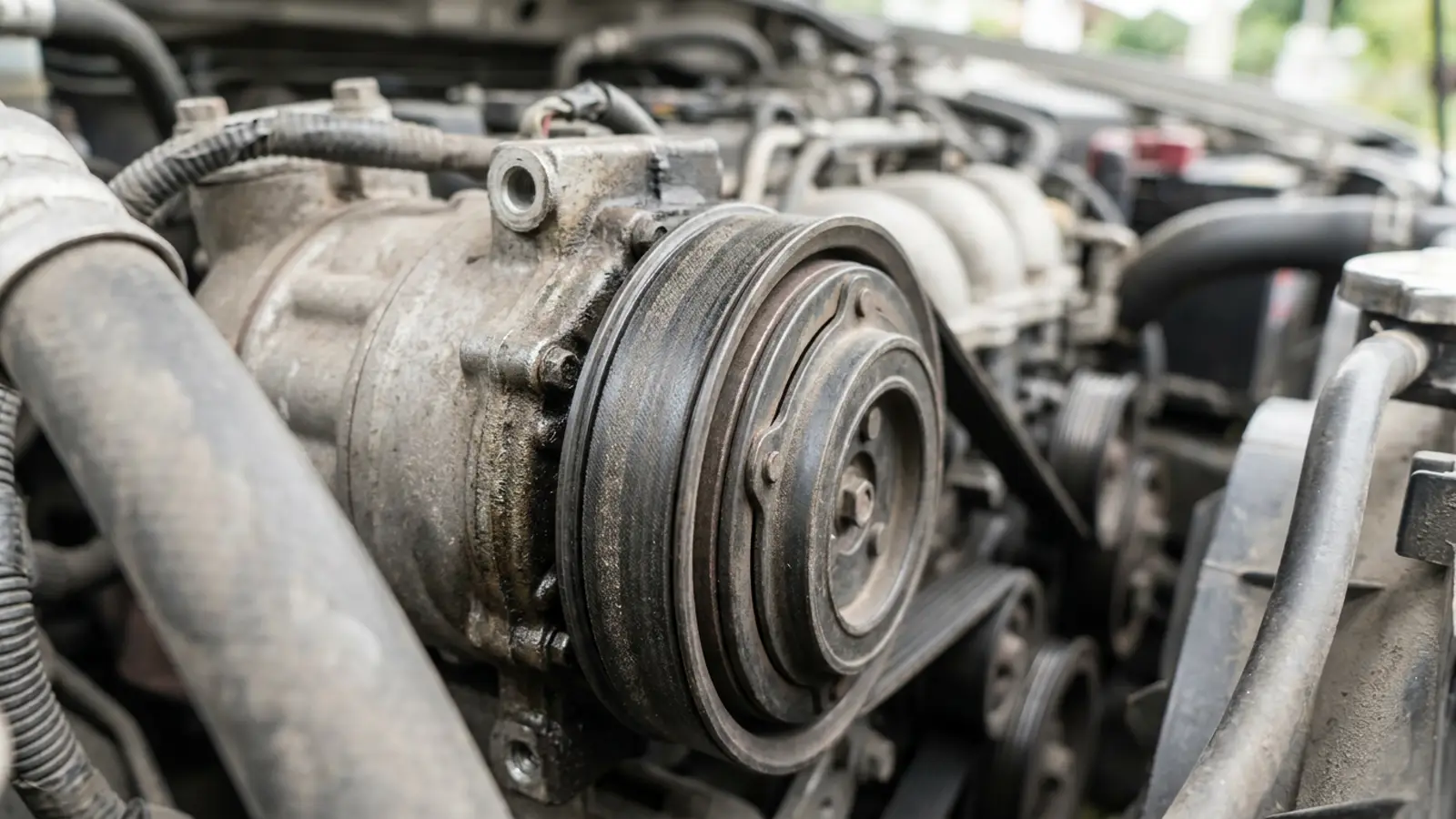
Causes, safe checks and when to call a professional
Expert Answer: AC Squealing in My Car
A squeal that appears the moment you switch the A/C on is almost always the drive belt slipping on the compressor pulley as the clutch adds load. The usual causes are a worn or glazed serpentine belt, a weak tensioner, a misaligned pulley, a failing compressor clutch, or a seizing compressor that the belt cannot turn. A squeal that persists with the A/C off points more toward the belt, tensioner or another accessory. Have it checked promptly — a belt that fails on the road also takes out your alternator and power steering assist.
Check these 3 things first
- 1Note whether the squeal starts exactly when the A/C is switched on.
- 2With the engine off and cool, inspect the serpentine belt for cracks or glazing.
- 3Note whether the squeal changes with engine RPM.
How Serious Is This?
GREEN — this issue's severity level
Usually Manageable(this issue)
Often resolved with basic homeowner checks and routine maintenance.
YELLOW
Inspection Recommended
Worth a professional diagnosis soon to avoid a larger repair.
RED
Potentially Serious
Stop using the system and get professional help right away.
Most Likely Causes of an AC Squealing in My Car
1. Worn or glazed serpentine belt
A belt that has lost grip slips under the added compressor load and squeals.
2. Weak belt tensioner
Insufficient tension allows slip precisely when load increases.
3. Failing compressor clutch
A worn clutch face or excessive air gap causes slipping and a metallic squeal.
4. Seizing compressor
A compressor with failing internal bearings resists turning and forces belt slip.
5. Pulley misalignment or bearing wear
An idler or tensioner bearing going bad squeals continuously and changes with engine speed.
6. Belt contamination
Coolant or oil on the belt destroys grip and causes squealing.
Safe Checks for an AC Squealing in My Car
- Note whether the squeal starts exactly when the A/C is switched on.
- Note whether it changes with engine RPM.
- With the engine off and cool, inspect the serpentine belt for cracks, glazing or missing ribs.
- Look for oil or coolant contamination on the belt.
- Note whether the squeal is worse when cold and fades as the engine warms.
- Never open a pressurized A/C line or attempt refrigerant service yourself.
- Keep hands and tools clear of belts, pulleys and fans whenever the engine is running.
Stop and get help if you notice
- • Grinding rather than squealing — potential compressor bearing failure.
- • Burning rubber smell.
- • Belt visibly shredding or fraying.
2-Minute Tests for an AC Squealing in My Car
Each test isolates one specific cause so you know what you are dealing with before anyone quotes you a repair. Stop immediately if anything feels unsafe.
Belt surface inspection
About 4 minutesTools: Flashlight
Tests for: Worn or glazed serpentine belt
- Turn the engine off and allow it to cool completely.
- Open the hood and locate the serpentine belt on the front of the engine.
- Shine a flashlight along the belt's ribbed underside and look for cracks, shiny glazing, or missing chunks.
- Normal result
- The belt surface looks matte black with intact ribs along its full length.
- Problem result
- The belt looks shiny and hard, or has cracks and missing rib sections.
What it means: A worn or glazed belt loses grip and slips under load, which is a common source of A/C-engagement squeal.
Engagement-timed noise check
About 2 minutesTools: None
Tests for: Failing compressor clutch
- Start the engine and let it idle with the A/C off.
- Turn the A/C on and listen for the exact moment a squeal starts.
- Turn the A/C back off and confirm the squeal stops.
- Normal result
- No squeal appears when the A/C is switched on or off.
- Problem result
- A squeal starts the instant the A/C is switched on and stops when it is switched off.
What it means: A squeal timed exactly to A/C engagement points to belt slip from the added compressor clutch load.
Belt contamination check
About 3 minutesTools: Flashlight, paper towel
Tests for: Belt contamination
- With the engine off and cool, look at the belt and the pulleys around it.
- Look for any oily sheen or wet residue on the belt surface.
- If safe to reach without touching moving parts, touch a paper towel to the belt surface once and check for staining.
- Normal result
- The belt surface is dry and clean with no residue transfer.
- Problem result
- The paper towel picks up an oily or coolant residue.
What it means: Fluid contamination destroys belt grip and is a common source of squealing that a fresh belt alone will not fix.
What Fixing an AC Squealing in My Car Typically Costs
Serpentine belt replacement
- DIY
- $20-$50 parts
- Professional
- $80-$220
- Typical time
- 0.5-1.5 hrs
Belt tensioner replacement
- DIY
- $40-$120 parts
- Professional
- $150-$400
- Typical time
- 1-2 hrs
Compressor clutch replacement
- DIY
- Not a DIY repair
- Professional
- $300-$700
- Typical time
- 1.5-3 hrs
Full compressor replacement
- DIY
- Not a DIY repair
- Professional
- $550-$1,600
- Typical time
- 2-5 hrs
| Problem | DIY cost | Professional cost | Typical time |
|---|---|---|---|
| Serpentine belt replacement | $20-$50 parts | $80-$220 | 0.5-1.5 hrs |
| Belt tensioner replacement | $40-$120 parts | $150-$400 | 1-2 hrs |
| Compressor clutch replacement | Not a DIY repair | $300-$700 | 1.5-3 hrs |
| Full compressor replacement | Not a DIY repair | $550-$1,600 | 2-5 hrs |
Ranges are national estimates for planning only. Local labor rates, equipment access and parts availability change what you will actually be quoted.
Working Through an AC Squealing in My Car
Does the squeal start exactly when the A/C engages?
Yes: Belt slip under compressor load, clutch wear or a seizing compressor.
No: Continue.
Is the squeal present with the A/C off?
Yes: Suspect the belt, tensioner or another accessory bearing.
No: Continue.
Is the sound grinding or metallic rather than a squeal?
Yes: Stop using the A/C and have the compressor inspected promptly.
No: Have the belt and tensioner inspected.
What the technician will check
- Belt condition, tension and alignment.
- Tensioner and idler bearing inspection.
- Compressor clutch air gap and engagement.
- Compressor shaft rotation and bearing condition.
- System pressure readings that could be overloading the compressor.
Repair considerations
- • Belts and tensioners are routine maintenance items and relatively inexpensive.
- • Clutch-only replacement is possible on some compressors but not all.
- • A seizing compressor usually means compressor replacement plus system flush and drier.
What this actually means
The A/C compressor is belt-driven, so engaging it suddenly increases the load on the accessory drive. That load reveals weaknesses that are silent otherwise. This is why a squeal timed exactly to A/C engagement is such a useful clue.
When to Call an Automotive AC Technician About an AC Squealing in My Car
- The noise is grinding or metallic.
- The belt is cracked, glazed or contaminated.
- The squeal is getting worse.
- You smell burning rubber.
Preventing an AC Squealing in My Car From Coming Back
- • Replace the serpentine belt at the manufacturer's interval.
- • Address fluid leaks that can contaminate the belt.
- • Run the A/C periodically year-round to keep the clutch and seals in good condition.
Worth doing yourself
- • Visually inspect the belt for cracking, glazing, or fraying at each service interval.
- • Check for oil or coolant leaks near the belt path and fix the source of contamination.
- • Note the exact conditions the squeal occurs under to describe it accurately to a shop.
Do not waste money on
- • Spraying belt dressing on a squealing belt — it masks the noise temporarily and can accelerate belt breakdown.
- • Continuing to run the A/C once the sound turns to grinding or metallic scraping.
- • Delaying a worn belt replacement, since a belt that snaps also disables the alternator and power steering assist.
Related Problems: AC Squealing in My Car
- GREEN — Usually ManageableCar ACWhy Is My AC Compressor Not Turning On in My Car?Read this next if the vehicle compressor clutch will not engage — low-pressure cutout, clutch coil, relay and control-side electrical diagnosis.View answer
- GREEN — Usually ManageableCar ACWhy Is My AC Not Blowing Cold Air in My Car?Read this next if vehicle A/C moves air through the dash vents but the air is not cold — automotive refrigerant, compressor clutch and condenser diagnosis.View answer
- GREEN — Usually ManageableCar ACWhy Is My AC Not Working in My Car?Read this next if broad vehicle A/C failure with no symptom specified — a triage page that classifies airflow, temperature and electrical failures.View answer
- GREEN — Usually ManageableCar ACWhy Is My AC Blowing Hot Air in My Car?Read this next if vehicle vents deliver genuinely hot air, implicating heater core blending and blend door position as much as the refrigeration loop.View answer
- GREEN — Usually ManageableCar ACWhy Is My AC Not Turning On in My Car?Read this next if pressing the A/C button produces no response at all — control head, fuse, relay and request-signal diagnosis rather than cooling performance.View answer
- GREEN — Usually ManageableCar ACWhy Is My AC Not Blowing Air in My Car?Read this next if no air movement from the dash vents at all — blower motor, resistor, fuse and cabin filter diagnosis rather than a refrigerant issue.View answer
- All Car AC problemsBrowse category
Frequently Asked Questions About an AC Squealing in My Car
Guidance this page draws on
- vehicle manufacturer service literature — serpentine belt routing and tensioner specifications
- SAE International — accessory drive belt design references