
Why Is My AC Unit Not Blowing Cold Air?
Causes, safe checks and when to call a professional
Expert Answer: AC Unit Not Blowing Cold Air
When you are looking at the equipment rather than the vents, the diagnosis gets faster. At the outdoor unit, the fan should be spinning and the compressor should be running with a steady sound; the large insulated line should be cold and sweating, the small line warm. At the indoor unit, the blower should be moving strong air and the coil should be frost-free. Anything that breaks that picture — silent condenser, warm suction line, iced coil, weak blower — points to a specific cause and most of them require a technician with gauges.
Check these 3 things first
- 1Identify whether the fault is at the outdoor condenser or the indoor air handler.
- 2Check if the outdoor fan, compressor hum, or contactor click are present.
- 3Inspect the indoor coil and blower compartment for ice or restriction.
How Serious Is This?
GREEN
Usually Manageable
Often resolved with basic homeowner checks and routine maintenance.
YELLOW — this issue's severity level
Inspection Recommended(this issue)
Worth a professional diagnosis soon to avoid a larger repair.
RED
Potentially Serious
Stop using the system and get professional help right away.
Most Likely Causes of an AC Unit Not Blowing Cold Air
1. Condenser not energizing
Tripped breaker, pulled disconnect, failed contactor or a bad capacitor leaves the outdoor unit dead while the indoor blower runs.
2. Condenser fan motor failure
Compressor runs, fan does not. Head pressure climbs, the unit gets very hot, and it usually trips off on an internal overload.
3. Failed run capacitor
A weak capacitor is one of the most common causes of a humming outdoor unit that will not start or that starts and stops.
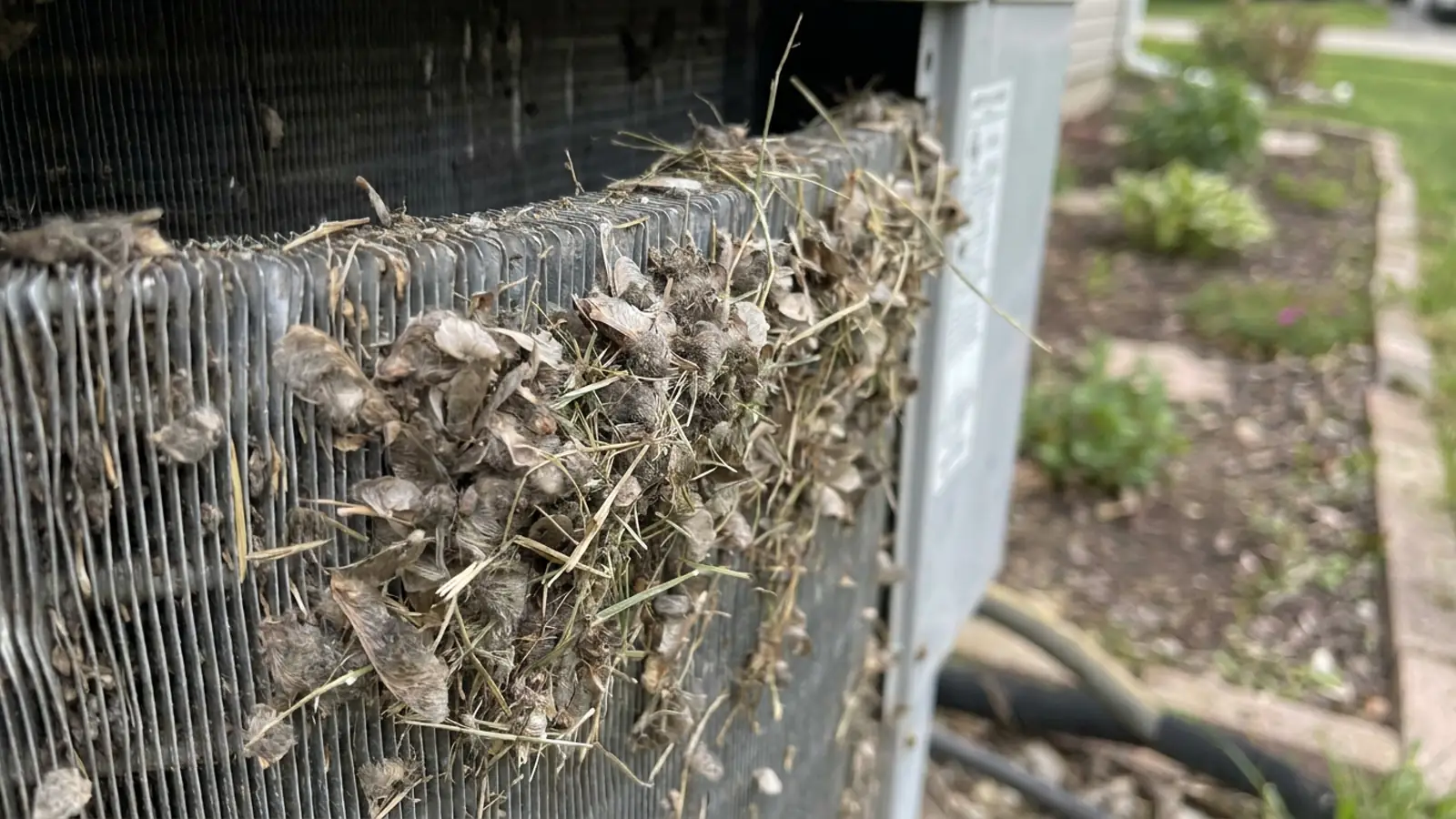
4. Dirty condenser coil
Blocked fins prevent heat rejection, so the equipment runs but produces little cooling.
5. Refrigerant undercharge or leak
Warm suction line, poor cooling, and sometimes frost near the metering device. Requires leak repair, not just a top-up.
6. Iced evaporator coil in the air handler
Visible frost inside the indoor cabinet blocks airflow and shuts down useful cooling until it is thawed and the cause corrected.
7. Blower motor or wheel problem
A dirty blower wheel or failing motor moves too little air across the coil for the system to cool the house.
Safe Homeowner Checks for an AC Unit Not Blowing Cold Air
- Look and listen at the outdoor unit: fan spinning, compressor running, no loud buzzing.
- Carefully touch the large insulated refrigerant line — it should feel cold and damp during operation.
- Check the outdoor disconnect box is fully seated and the breaker is on.
- Look at the indoor coil access panel area for frost or water.
- Feel airflow at the return grille — weak return airflow points to a filter or blower issue.
- Clear vegetation and debris away from the condenser.
Stop and get help if you notice
- • Loud buzzing from the outdoor unit with no fan rotation.
- • Outdoor cabinet that is extremely hot to be near.
- • Burnt smell at the disconnect or contactor area.
2-Minute Tests for an AC Unit Not Blowing Cold Air
Each test isolates one specific cause so you know what you are dealing with before anyone quotes you a repair. Stop immediately if anything feels unsafe.
Contactor engagement check
About 3 minutesTools: None
Tests for: Condenser not energizing
- Set thermostat to call for cooling.
- Listen closely at the outdoor unit disconnect area for a click.
- Note whether anything happens at all after the click.
- Normal result
- You hear a click and the fan and compressor start together.
- Problem result
- No click occurs, or a click happens with no equipment starting.
What it means: The contactor is not pulling in or is not delivering power to the condenser.
Fan blade rotation check
About 3 minutesTools: None
Tests for: Condenser fan motor failure
- Observe the top fan grille while cooling is called.
- Check if the compressor hums but the fan blade stays still.
- Normal result
- Fan spins freely whenever the unit is powered.
- Problem result
- Compressor hums but the fan blade does not turn.
What it means: A failed fan motor lets the compressor overheat and stops effective heat rejection.
Coil fin obstruction check
About 5 minutesTools: Flashlight
Tests for: Dirty condenser coil
- Inspect coil fins on all sides of the outdoor cabinet.
- Look for compacted dirt, grass or cottonwood.
- Rinse gently with a hose if dirty.
- Normal result
- Fins are clean and airflow passes through freely.
- Problem result
- Fins are matted with debris blocking airflow.
What it means: A blocked coil prevents the condenser from rejecting indoor heat outdoors.
Indoor coil ice inspection
About 5 minutesTools: Flashlight
Tests for: Iced evaporator coil in the air handler
- Turn cooling off and leave fan running to thaw.
- Open the air handler access panel if reachable.
- Shine a light on the coil surface.
- Normal result
- Coil surface is dry with no frost.
- Problem result
- Coil is covered in frost or solid ice.
What it means: Ice blocks airflow at the indoor coil, cutting off cold air delivery to the house.
Blower operation check
About 3 minutesTools: None
Tests for: Blower motor or wheel problem
- Listen at the air handler for the blower running.
- Feel for weak or absent airflow at the nearest register.
- Note any grinding or rattling sounds.
- Normal result
- Blower runs quietly and airflow is strong at the nearest register.
- Problem result
- Blower is silent, weak, or grinding.
What it means: A failing blower motor or dirty blower wheel cannot move enough air across the coil.
What Fixing an AC Unit Not Blowing Cold Air Typically Costs
Contactor replacement
- DIY
- Not a DIY repair
- Professional
- $150-$350
- Typical time
- 1 hour
Condenser fan motor replacement
- DIY
- Not a DIY repair
- Professional
- $300-$650
- Typical time
- 1-2 hours
Coil cleaning
- DIY
- $0 (hose rinse)
- Professional
- $100-$250
- Typical time
- 30-60 minutes
Blower motor replacement
- DIY
- Not a DIY repair
- Professional
- $400-$900
- Typical time
- 2-3 hours
Refrigerant leak repair
- DIY
- Not a DIY repair
- Professional
- $300-$1,800+
- Typical time
- 2-6 hours
| Problem | DIY cost | Professional cost | Typical time |
|---|---|---|---|
| Contactor replacement | Not a DIY repair | $150-$350 | 1 hour |
| Condenser fan motor replacement | Not a DIY repair | $300-$650 | 1-2 hours |
| Coil cleaning | $0 (hose rinse) | $100-$250 | 30-60 minutes |
| Blower motor replacement | Not a DIY repair | $400-$900 | 2-3 hours |
| Refrigerant leak repair | Not a DIY repair | $300-$1,800+ | 2-6 hours |
Ranges are national estimates for planning only. Local labor rates, equipment access and parts availability change what you will actually be quoted.
Working Through an AC Unit Not Blowing Cold Air
Is the outdoor unit completely silent during a cooling call?
Yes: Check breaker and disconnect, then call for service — likely electrical.
No: Continue to the fan and line temperature checks.
Is the outdoor fan spinning while the compressor runs?
Yes: Good. Check line temperatures and coil cleanliness.
No: Shut the system off — running a compressor without condenser airflow can damage it.
Is the large suction line cold and sweating?
Yes: Refrigeration is working; look at airflow, ducts and capacity.
No: Suspect low charge or a compressor that is not pumping.
What the technician will check
- Capacitor and contactor testing.
- Compressor and fan motor amp draw.
- Refrigerant pressures, superheat and subcooling.
- Coil condition inside and out.
- Blower wheel cleanliness and motor performance.
Repair considerations
- • Capacitors and contactors are inexpensive, high-frequency failures.
- • Condenser fan motors are a moderate repair.
- • Compressor replacement on an aging system is usually weighed against full replacement.
What this actually means
The two halves of a split system tell you different things. The outdoor unit shows whether heat is being rejected; the indoor unit shows whether heat is being absorbed and whether air is moving. Reading both at once separates electrical failures from refrigerant failures from airflow failures without any tools.
When to Call an HVAC Professional About an AC Unit Not Blowing Cold Air
- The outdoor unit hums, buzzes or will not start.
- The condenser fan does not spin while the compressor runs.
- The suction line is warm during operation.
- You see ice inside the indoor cabinet.
Preventing an AC Unit Not Blowing Cold Air From Coming Back
- • Annual electrical component testing during maintenance.
- • Keep the condenser coil clean and clear.
- • Replace filters before they load up enough to affect the blower.
Worth doing yourself
- • Rinse the outdoor coil clean of debris.
- • Replace the indoor filter to reduce icing risk.
- • Turn off cooling and let an iced coil thaw fully before restarting.
- • Clear vegetation and clutter from around the outdoor unit.
Do not waste money on
- • Do not touch the contactor or capacitor inside the outdoor disconnect panel.
- • Do not attempt to remove or lubricate the blower motor yourself.
- • Do not run the system continuously while the coil is iced.
Related Problems: AC Unit Not Blowing Cold Air
- YELLOW — Inspection RecommendedAC Not CoolingWhy Is My AC Not Blowing Cold Air?Read this next if air is moving from the supply registers but it is not noticeably cold at the vent.View answer
- YELLOW — Inspection RecommendedAC Won't StartWhy Is My AC Compressor Not Turning On?Read this next if the compressor specifically will not start while other parts of the system may operate — component-level diagnosis.View answer
- YELLOW — Inspection RecommendedAC Won't StartWhy Is My AC Unit Not Turning On?Read this next if the equipment cabinet itself will not start — visitor is standing at the outdoor condenser or air handler observing hardware behaviour.View answer
- YELLOW — Inspection RecommendedAC FreezingWhy Is My AC Unit Freezing Up?Read this next if ice located on the physical unit — indoor cabinet or outdoor condenser and line set — with emphasis on where the ice appears and what each location means.View answer
- YELLOW — Inspection RecommendedAC Not CoolingWhy Is My AC Not Cooling?Read this next if general residential AC cooling failure with no specific symptom named yet.View answer
- YELLOW — Inspection RecommendedAC Not CoolingWhy Is My AC Not Blowing Cold?Read this next if quick check of the vent temperature itself — visitor is standing at a register right now wanting the fastest first moves.View answer
- All AC Not Cooling problemsBrowse category
Frequently Asked Questions About an AC Unit Not Blowing Cold Air
Guidance this page draws on
- HVAC manufacturer service literature — Condenser and air handler component diagnostic steps.
- ACCA — Equipment-side fault isolation standards.