
Why Is My AC Making a Hissing Noise?
Causes, safe checks and when to call a professional
Expert Answer: AC Making a Hissing Noise
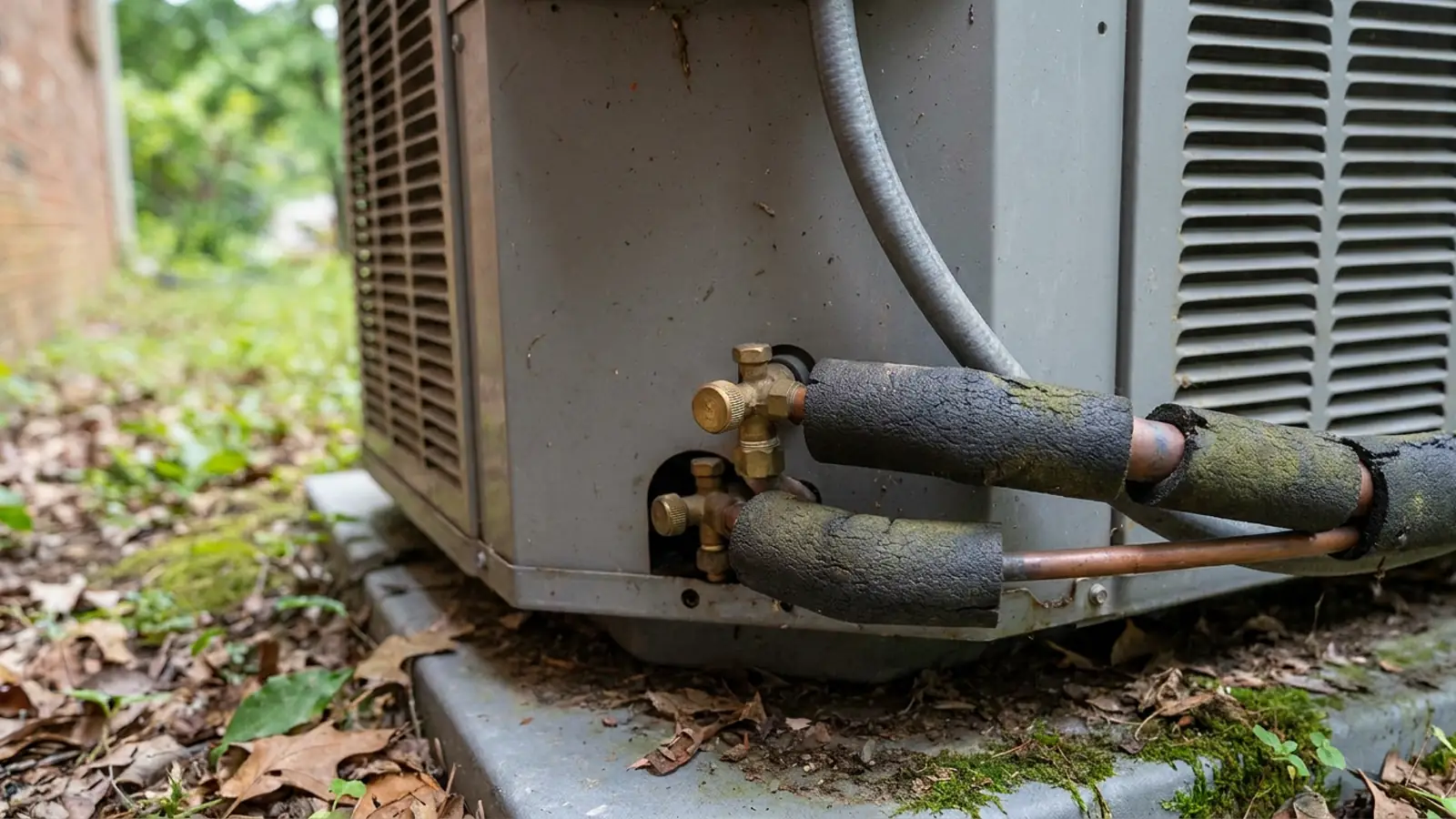
Hissing has three main explanations. A brief hiss right after the system shuts off is normal refrigerant pressure equalizing. A continuous hiss near the indoor coil or the copper lines while running can indicate a refrigerant leak, especially if cooling has been declining. A hiss near a duct, register or filter slot is air escaping through a gap, which wastes capacity but is not hazardous. Continuous hissing plus declining cooling is the combination that warrants a technician — that is the refrigerant leak pattern.
Check these 3 things first
- 1Note whether the hiss happens during operation or only briefly after shutdown.
- 2Locate it precisely: at the indoor coil, the outdoor copper lines, or at ducts and registers.
- 3Check whether cooling performance has been declining alongside the hiss.
How Serious Is This?
GREEN
Usually Manageable
Often resolved with basic homeowner checks and routine maintenance.
YELLOW — this issue's severity level
Inspection Recommended(this issue)
Worth a professional diagnosis soon to avoid a larger repair.
RED
Potentially Serious
Stop using the system and get professional help right away.
Most Likely Causes of an AC Making a Hissing Noise
1. Refrigerant leak at the coil, valve or line set
Escaping refrigerant hisses continuously and leaves an oily residue at the leak point.
2. Normal pressure equalization after shutdown
A short hiss lasting a minute or two after the compressor stops is expected.
3. Duct leak or unsealed register boot
Pressurized supply air escaping through a gap whistles or hisses.
4. Air bypassing a poorly fitted filter
Gaps around the filter frame create a distinct hiss at the return.
5. Metering device restriction
A TXV or orifice under abnormal conditions can produce a pronounced hiss or whistle.
6. Compressor valve leakage
Internal leakage can be audible as a persistent hiss at the outdoor unit.
Safe Homeowner Checks for an AC Making a Hissing Noise
- Note whether the hiss happens during operation or only after shutdown.
- Locate it: indoor coil area, copper lines outside, or duct and registers.
- Check the filter fit for gaps.
- Look for oily residue on refrigerant lines and fittings.
- Note whether cooling performance has declined recently.
- Ventilate the area and shut the system off if the hiss is loud and continuous at the coil.
Stop and get help if you notice
- • Continuous hissing at the coil plus falling cooling performance.
- • Oily film on copper lines or fittings.
- • Ice forming along with the hiss.
2-Minute Tests for an AC Making a Hissing Noise
Each test isolates one specific cause so you know what you are dealing with before anyone quotes you a repair. Stop immediately if anything feels unsafe.
Coil-area continuous hiss test
About 3 minutesTools: None
Tests for: Refrigerant leak at the coil, valve or line set
- Stand near the indoor coil access panel or the outdoor line set while the system runs.
- Listen for a steady, unchanging hiss lasting the entire run cycle.
- Visually check exposed copper fittings for an oily residue without touching them.
- Normal result
- No sustained hiss at the coil or line set during operation.
- Problem result
- A continuous hiss at the coil or lines paired with oily residue at a fitting.
What it means: This combination is the classic refrigerant leak signature and needs a certified technician.
Shutdown timing test
About 3 minutesTools: A stopwatch or phone timer
Tests for: Normal pressure equalization after shutdown
- Turn the thermostat down so the system stops.
- Start a timer the moment the compressor shuts off.
- Note how long any hiss or gurgle lasts before going silent.
- Normal result
- A hiss or gurgle that fades out within about two minutes.
- Problem result
- Hissing that continues well beyond two minutes or resumes without a cycle.
What it means: A hiss confined to the first couple minutes after shutdown is normal pressure equalization.
Register and duct hiss walk
About 5 minutesTools: None
Tests for: Duct leak or unsealed register boot
- Walk to each supply register while the system runs on cooling.
- Listen close to each register and duct joint for a hissing or whistling tone.
- Check accessible duct connections in the attic or basement the same way.
- Normal result
- Air movement sound only, no sharp hissing at any single point.
- Problem result
- A distinct hiss localized at one register boot or duct joint.
What it means: A localized hiss at a duct joint is an air leak, wasting capacity but not hazardous.
Filter gap check
About 2 minutesTools: Flashlight
Tests for: Air bypassing a poorly fitted filter
- Remove the filter and check its dimensions against the filter slot.
- Reinsert it and look for visible gaps around the frame with a flashlight.
- Listen at the filter door while the system runs for a hiss.
- Normal result
- The filter fits snugly with no visible gaps and no hiss at the door.
- Problem result
- Visible gaps around the frame paired with an audible hiss.
What it means: A gapped filter frame lets return air bypass and hiss through the opening.
What Fixing an AC Making a Hissing Noise Typically Costs
Filter resizing/reseating
- DIY
- $0-$30
- Professional
- N/A
- Typical time
- 10 minutes
Duct boot sealing
- DIY
- $15-$40
- Professional
- $150-$350
- Typical time
- 1-2 hours
Electronic refrigerant leak detection
- DIY
- Not a DIY repair
- Professional
- $150-$350
- Typical time
- 1-2 hours
Coil leak repair or replacement
- DIY
- Not a DIY repair
- Professional
- $700-$2,200
- Typical time
- 3-6 hours
Refrigerant recharge after repair
- DIY
- Not a DIY repair
- Professional
- $200-$600
- Typical time
- 1-2 hours
| Problem | DIY cost | Professional cost | Typical time |
|---|---|---|---|
| Filter resizing/reseating | $0-$30 | N/A | 10 minutes |
| Duct boot sealing | $15-$40 | $150-$350 | 1-2 hours |
| Electronic refrigerant leak detection | Not a DIY repair | $150-$350 | 1-2 hours |
| Coil leak repair or replacement | Not a DIY repair | $700-$2,200 | 3-6 hours |
| Refrigerant recharge after repair | Not a DIY repair | $200-$600 | 1-2 hours |
Ranges are national estimates for planning only. Local labor rates, equipment access and parts availability change what you will actually be quoted.
Working Through an AC Making a Hissing Noise
Does the hiss occur only for a minute after shutdown?
Yes: Normal pressure equalization.
No: Continue.
Is the hiss near ducts, registers or the filter slot?
Yes: Air leak — sealing improves efficiency and eliminates the noise.
No: Continue.
Is cooling declining along with continuous hissing?
Yes: Refrigerant leak is likely. Schedule a certified technician.
No: Seal air leaks and monitor performance.
What the technician will check
- Electronic leak detection at coil, valves and line set.
- Charge measurement.
- Metering device evaluation.
- Duct pressure testing if the hiss is air-related.
- Compressor valve performance assessment.
Repair considerations
- • Duct and filter sealing is inexpensive.
- • Refrigerant leak repair depends heavily on location; coil leaks are the costly case.
- • Refrigerant type and system age influence whether repair or replacement makes sense.
What this actually means
Hissing is the sound of gas moving through a small opening. Whether that gas is refrigerant or air determines everything about how serious it is. Location and timing separate the two: refrigerant hissing lives at the coil, valves and line set; air hissing lives at ducts, boots and the filter cabinet.
When to Call an HVAC Professional About an AC Making a Hissing Noise
- Hissing is continuous during operation.
- Cooling is declining.
- You find oily residue on refrigerant components.
- Ice appears along with the hiss.
Preventing an AC Making a Hissing Noise From Coming Back
- • Annual leak inspection during maintenance.
- • Keep the line set protected from physical damage.
- • Use correctly sized filters that seal in their track.
Worth doing yourself
- • Reseat or replace a poorly fitting filter with the correct size.
- • Seal accessible duct joints with mastic or metal tape where a hiss is located.
- • Note performance changes and report them alongside the hiss location to a technician.
Do not waste money on
- • Never attempt to add refrigerant or touch line set fittings yourself.
- • Do not use household spray sealants near refrigerant lines to try to stop a hiss.
Related Problems: AC Making a Hissing Noise
- YELLOW — Inspection RecommendedAC Water LeaksWhy Is My AC Leaking?Read this next if leak type is unidentified — the visitor has not established whether it is water, refrigerant or oil, so the page must help classify the leak.View answer
- GREEN — Usually ManageableAC NoisesWhy Is My AC Whistling?Read this next if high-pitched airflow noise driven by duct static pressure and restriction — an air distribution problem rather than a mechanical failure.View answer
- GREEN — Usually ManageableAC NoisesWhy Is My AC Making Noise?Read this next if sound type not yet identified — the page must act as a sound directory that maps each noise to its likely cause.View answer
- YELLOW — Inspection RecommendedAC Not CoolingWhy Is My AC Not Cooling?Read this next if general residential AC cooling failure with no specific symptom named yet.View answer
- YELLOW — Inspection RecommendedAC FreezingWhy Is My AC Freezing Up?Read this next if ice is actively forming during operation and the visitor wants the mechanism plus the immediate corrective action.View answer
- YELLOW — Inspection RecommendedAC NoisesWhy Is My AC Making a Weird Noise?Read this next if the sound is unfamiliar and hard to describe — the visitor needs help characterising it and deciding whether to keep running the system.View answer
- All AC Noises problemsBrowse category
Frequently Asked Questions About an AC Making a Hissing Noise
Guidance this page draws on
- U.S. EPA — Regulations and safe handling requirements around refrigerant leak repair by certified technicians.
- HVAC manufacturer service literature — Metering device and coil leak diagnostic procedures.