
Why Is My AC Blowing Warm Air?
Causes, safe checks and when to call a professional
Expert Answer: AC Blowing Warm Air
Warm air sits between working and failed, and that middle ground is informative. It usually means the compressor is running but not producing enough cooling — low refrigerant charge, a dirty or blocked condenser coil, or a compressor cutting out on an overload after a few minutes. It can also mean the compressor stopped and only the blower is running. Check whether the air was cold earlier and turned warm, or whether it has been steadily degrading, and check whether the outdoor unit is running right now. Those two facts point at very different repairs.
Check these 3 things first
- 1Note whether the air is mildly warm rather than completely uncooled or hot.
- 2Check how long ago cooling performance started to slip.
- 3Confirm the fan setting is AUTO, not ON.
How Serious Is This?
GREEN
Usually Manageable
Often resolved with basic homeowner checks and routine maintenance.
YELLOW — this issue's severity level
Inspection Recommended(this issue)
Worth a professional diagnosis soon to avoid a larger repair.
RED
Potentially Serious
Stop using the system and get professional help right away.
Most Likely Causes of an AC Blowing Warm Air
1. Compressor cutting out on overload
The system cools for a while, then the compressor trips off on internal protection and only warm air continues. Often triggered by a dirty condenser or electrical weakness.
2. Low refrigerant from a slow leak
Capacity falls gradually. On a hot day the system cannot keep up, and vent air feels warm rather than cold.
3. Evaporator coil beginning to ice
Partial icing reduces airflow and cooling, so vent air warms progressively during a long run cycle.
4. Dirty condenser coil
Poor heat rejection in high ambient temperatures produces warm supply air by afternoon.
5. Fan set to ON
Continuous blower operation delivers warm air between compressor cycles.
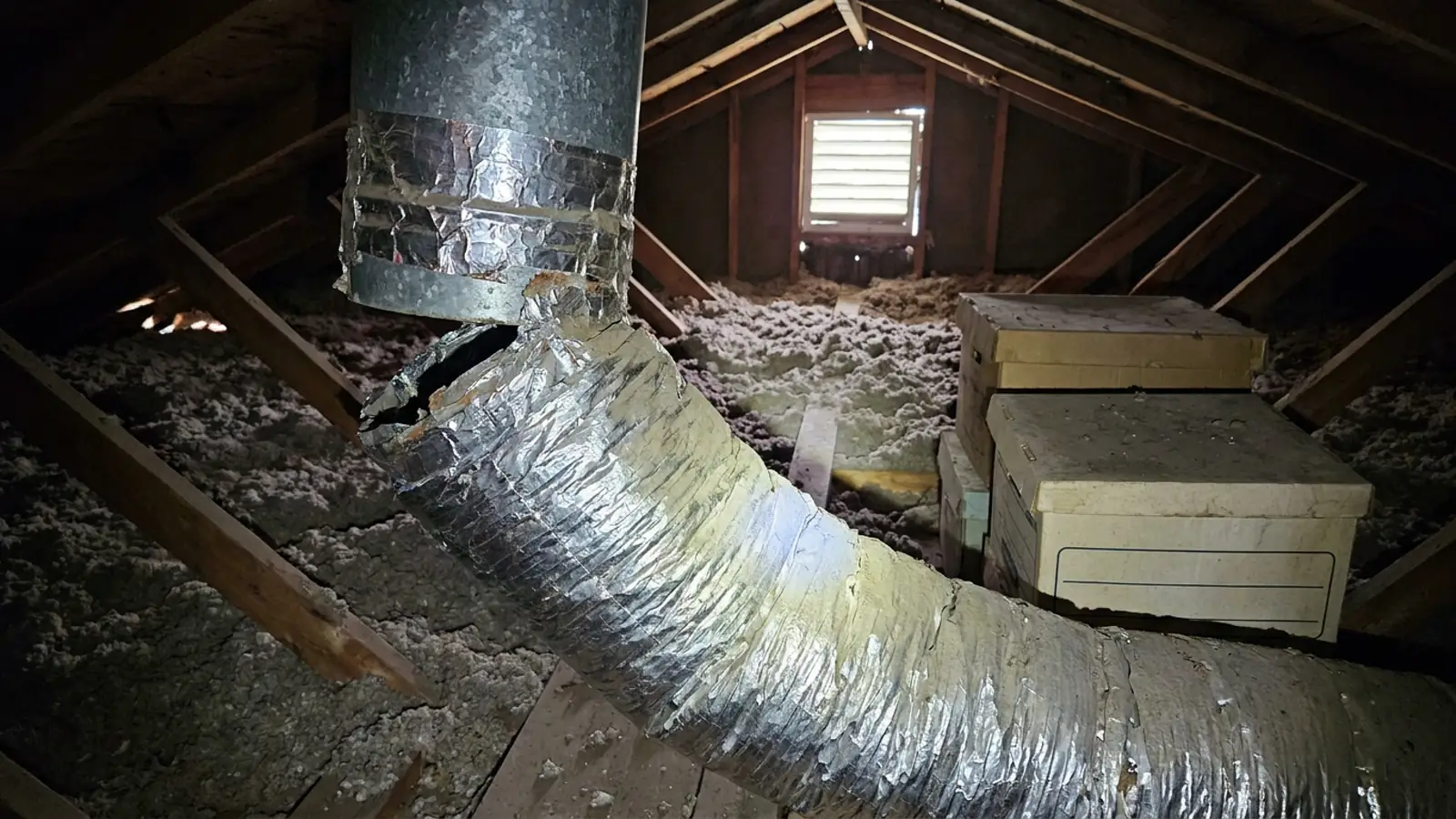
6. Duct heat gain
Cold air warms in an unconditioned attic before it reaches distant rooms.
Safe Homeowner Checks for an AC Blowing Warm Air
- Note the timing: warm all the time, or warm after running a while?
- Set the fan to AUTO.
- Check the filter and replace it if loaded.
- Watch the outdoor unit for 20 minutes — does the compressor shut off while the fan keeps spinning?
- Look for frost on the suction line or indoor coil.
- Rinse debris off the outdoor coil with the power off.
Stop and get help if you notice
- • Compressor shutting down within minutes and restarting repeatedly.
- • Ice building up during operation.
- • Buzzing or clicking at the outdoor unit before the air turns warm.
2-Minute Tests for an AC Blowing Warm Air
Each test isolates one specific cause so you know what you are dealing with before anyone quotes you a repair. Stop immediately if anything feels unsafe.
Short-cycling observation
About 15 minutesTools: None
Tests for: Compressor cutting out on overload
- Start a cooling cycle and note the time.
- Listen for the outdoor unit shutting off after only a few minutes.
- Note if it restarts shortly after and repeats the pattern.
- Normal result
- The outdoor unit runs continuously for at least 10-15 minutes per cycle.
- Problem result
- The unit shuts off after just a few minutes and repeatedly restarts.
What it means: The compressor is tripping on internal overload protection, which gradually reduces cooling capacity.
Gradual warmth trend check
About 3 minutesTools: None
Tests for: Low refrigerant from a slow leak
- Recall whether air has gotten progressively less cold over recent weeks.
- Check for oily spots near refrigerant fittings if visible.
- Normal result
- Cooling has been consistent with no gradual decline.
- Problem result
- Air has slowly warmed over several weeks with no other changes.
What it means: A slow refrigerant leak reduces cooling capacity gradually rather than suddenly.
Early icing check
About 5 minutesTools: Flashlight
Tests for: Evaporator coil beginning to ice
- Open the air handler panel if accessible.
- Look for a thin frost line rather than solid ice.
- Check filter condition at the same time.
- Normal result
- No frost is visible on the coil.
- Problem result
- A thin layer of frost is starting to form.
What it means: Early icing reduces airflow gradually, which shows up first as mildly warm rather than fully warm air.
Time-of-day performance check
About 5 minutesTools: None
Tests for: Dirty condenser coil
- Compare vent air temperature in the morning and mid-afternoon.
- Inspect the outdoor coil fins for buildup.
- Normal result
- Vent temperature stays fairly consistent throughout the day.
- Problem result
- Air is noticeably warmer in the afternoon heat than in the morning.
What it means: A dirty condenser struggles most when outdoor temperatures peak, producing mildly warm air on hot afternoons.
What Fixing an AC Blowing Warm Air Typically Costs
Filter replacement
- DIY
- $15-$30
- Professional
- $40-$80
- Typical time
- 10 minutes
Condenser coil cleaning
- DIY
- $0 (hose rinse)
- Professional
- $100-$250
- Typical time
- 30-60 minutes
Capacitor replacement (overload fix)
- DIY
- Not a DIY repair
- Professional
- $150-$400
- Typical time
- 1 hour
Refrigerant leak repair
- DIY
- Not a DIY repair
- Professional
- $300-$1,800+
- Typical time
- 2-6 hours
| Problem | DIY cost | Professional cost | Typical time |
|---|---|---|---|
| Filter replacement | $15-$30 | $40-$80 | 10 minutes |
| Condenser coil cleaning | $0 (hose rinse) | $100-$250 | 30-60 minutes |
| Capacitor replacement (overload fix) | Not a DIY repair | $150-$400 | 1 hour |
| Refrigerant leak repair | Not a DIY repair | $300-$1,800+ | 2-6 hours |
Ranges are national estimates for planning only. Local labor rates, equipment access and parts availability change what you will actually be quoted.
Working Through an AC Blowing Warm Air
Was the air cold earlier today and warm now?
Yes: Suspect an intermittent fault — overload trip, icing coil or a failing capacitor.
No: Suspect a gradual capacity loss — charge, coil fouling or duct loss.
Is the outdoor compressor still running while the air is warm?
Yes: Refrigeration is running without enough capacity — charge and coil evaluation needed.
No: The compressor has dropped out. Electrical diagnosis needed.
Is there any visible frost or ice?
Yes: Switch to fan-only to thaw and schedule service.
No: Continue with the charge and coil path.
What the technician will check
- Compressor amp draw and overload behavior.
- Refrigerant pressures under load.
- Condenser coil cleanliness and fan performance.
- Airflow measurement at the indoor coil.
- Capacitor testing.
Repair considerations
- • Repeated overload trips can indicate compressor wear, which is a major-component decision.
- • Charge correction requires leak location first.
- • Coil cleaning is inexpensive relative to the capacity it can restore.
What this actually means
Warm air that used to be cold suggests something intermittent: a compressor tripping on a thermal overload, a condenser fan cycling off, or a coil beginning to ice. Air that has been slowly getting warmer over weeks suggests a gradual refrigerant leak or accumulating coil dirt.
When to Call an HVAC Professional About an AC Blowing Warm Air
- The compressor cycles off and on every few minutes.
- Cooling degrades within an hour of starting.
- Ice forms during normal operation.
- Basic checks change nothing.
Preventing an AC Blowing Warm Air From Coming Back
- • Keep the outdoor coil clean throughout the season.
- • Have capacitors tested annually — weak capacitors stress the compressor.
- • Change filters before they restrict airflow.
Worth doing yourself
- • Set fan to AUTO to avoid mixing in room air between cycles.
- • Rinse the outdoor coil at the start of each cooling season.
- • Replace the filter on schedule to slow gradual coil icing.
- • Track when warmth started to catch a slow leak early.
Related Problems: AC Blowing Warm Air
- YELLOW — Inspection RecommendedAC Not CoolingWhy Is My AC Blowing Hot Air?Read this next if vent air is genuinely warm or hot rather than merely uncooled, suggesting reversed mode, heat operation, or a total loss of the cooling cycle.View answer
- YELLOW — Inspection RecommendedAC Not CoolingWhy Is My AC Not Blowing Cold Air?Read this next if air is moving from the supply registers but it is not noticeably cold at the vent.View answer
- YELLOW — Inspection RecommendedAC Not CoolingWhy Is My AC Not Cold?Read this next if short, immediate phrasing — visitor wants the shortest possible explanation and the single most likely cause.View answer
- YELLOW — Inspection RecommendedAC Operation ProblemsWhy Is My AC Short Cycling?Read this next if compressor starts and stops after only a few minutes, repeatedly — a cycling behaviour problem rather than a temperature complaint.View answer
- YELLOW — Inspection RecommendedAC FreezingWhy Is My AC Freezing Up?Read this next if ice is actively forming during operation and the visitor wants the mechanism plus the immediate corrective action.View answer
- YELLOW — Inspection RecommendedAC Operation ProblemsWhy Is My AC Running But Not Cooling?Read this next if system operates continuously but conditioned air does not reduce indoor temperature — runtime is normal, results are not.View answer
- All AC Not Cooling problemsBrowse category
Frequently Asked Questions About an AC Blowing Warm Air
Guidance this page draws on
- HVAC manufacturer service literature — Compressor overload protection behavior.
- U.S. EPA — Refrigerant leak detection and repair requirements.