
Why Is My AC Freezing Up?
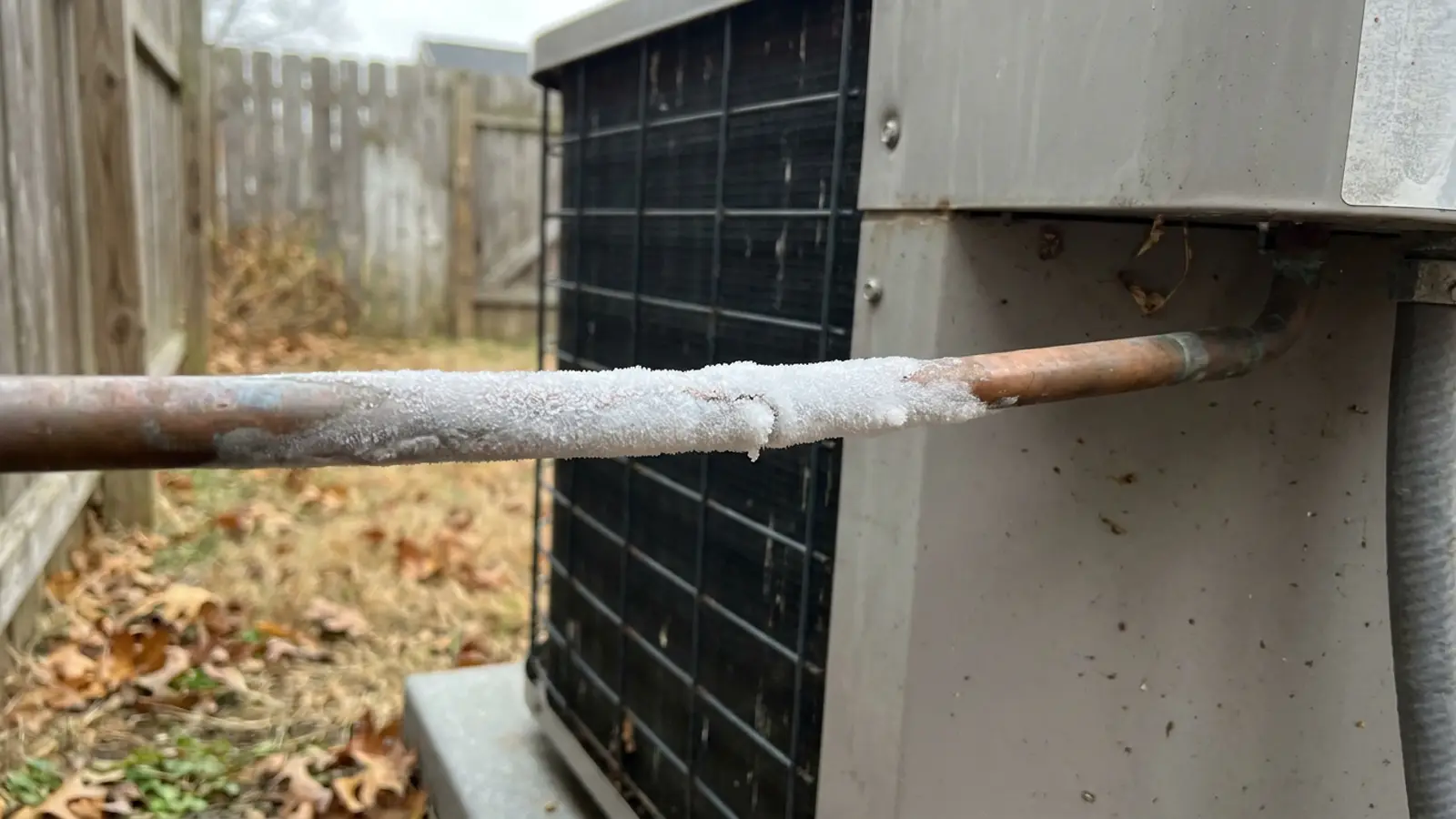
Causes, safe checks and when to call a professional
Expert Answer: AC Freezing Up
An air conditioner freezes when the evaporator coil drops below 32°F, and there are only two real reasons that happens: not enough warm air is flowing across the coil, or there is not enough refrigerant in the system. Airflow problems — a dirty filter, closed vents, a dirty coil, a weak blower — cause most cases. Low charge from a leak causes most of the rest. Turn cooling off and run the fan to thaw the ice, then fix the underlying cause. Continuing to run a frozen system can flood liquid refrigerant back to the compressor and damage it.
Check these 3 things first
- 1Turn cooling off and set the fan to ON to begin thawing immediately.
- 2Check the air filter for visible dirt or blockage.
- 3Confirm at least 80% of supply registers are open.
How Serious Is This?
GREEN
Usually Manageable
Often resolved with basic homeowner checks and routine maintenance.
YELLOW — this issue's severity level
Inspection Recommended(this issue)
Worth a professional diagnosis soon to avoid a larger repair.
RED
Potentially Serious
Stop using the system and get professional help right away.
Most Likely Causes of an AC Freezing Up
1. Dirty air filter
The number one cause. Restricted return air means less heat reaching the coil, so the coil temperature falls.
2. Low refrigerant charge from a leak
Low pressure in the evaporator lowers its saturation temperature below freezing even with good airflow.
3. Dirty evaporator coil
Dust bridging the fins reduces airflow and heat transfer. Common when filters have been neglected.
4. Blower running too slowly or failing
A wrong speed tap, a dirty blower wheel or a weak motor moves too little air across the coil.
5. Closed registers and blocked returns
Closing too many vents reduces system airflow below what the coil requires.
6. Running the AC in cool weather
Operating cooling when outdoor temperatures are below roughly 60°F drives evaporator pressure down and promotes icing.
7. Failed metering device
A restricted or stuck TXV or orifice starves the coil and produces localized frost that spreads.
Safe Homeowner Checks for an AC Freezing Up
- Turn the thermostat to OFF for cooling and set the fan to ON to thaw the ice.
- Replace the air filter while it thaws.
- Open every supply register and clear anything blocking return grilles.
- Check the condensate drain — a large thaw produces a lot of water.
- After it is fully thawed, restart cooling and watch whether frost returns within a few hours.
- Look at the outdoor unit for a dirty coil and clear vegetation.
Stop and get help if you notice
- • Ice returning within hours of a full thaw — usually refrigerant related.
- • Water overflowing the drain pan during thaw.
- • Compressor making a liquid slugging or knocking sound.
2-Minute Tests for an AC Freezing Up
Each test isolates one specific cause so you know what you are dealing with before anyone quotes you a repair. Stop immediately if anything feels unsafe.
Filter airflow inspection
About 2 minutesTools: None
Tests for: Dirty air filter
- Pull the filter from its slot.
- Hold it up to a light source.
- Look for a filter so clogged that little or no light passes through.
- Normal result
- Light passes through the filter material easily.
- Problem result
- The filter is visibly gray or black with almost no light passing through.
What it means: A clogged filter is the single most common cause of coil freezing because it starves the coil of the warm air it needs to stay above freezing.
Register and return count
About 5 minutesTools: None
Tests for: Closed registers and blocked returns
- Walk through the house and count how many supply registers are closed.
- Check return grilles for furniture or rugs blocking them.
- Open closed registers and clear blocked returns.
- Normal result
- Nearly all registers are open and returns are unobstructed.
- Problem result
- Multiple registers are closed or a return is blocked.
What it means: Closing too many vents reduces the total airflow the coil needs and can trigger freezing even with a clean filter.
Post-thaw recurrence test
About 15 minutesTools: A clean filter
Tests for: Low refrigerant charge from a leak
- Thaw the system fully with the fan running and cooling off.
- Install a clean filter and open all registers.
- Restart cooling and note the exact time.
- Check the coil again after a few hours of normal operation.
- Normal result
- No new frost appears after several hours of running with a clean filter.
- Problem result
- Frost reappears within a few hours despite good airflow.
What it means: Recurring ice with confirmed good airflow points strongly toward low refrigerant charge or a metering device problem.
What Fixing an AC Freezing Up Typically Costs
Filter replacement
- DIY
- $0 (filter only)
- Professional
- Included in maintenance
- Typical time
- 5 minutes
Coil cleaning
- DIY
- Not typically DIY
- Professional
- $150-$400
- Typical time
- 1-2 hours
Blower motor replacement
- DIY
- Not a DIY repair
- Professional
- $350-$1,200
- Typical time
- 1-2 hours
Refrigerant leak diagnosis
- DIY
- Not a DIY repair
- Professional
- $150-$350 diagnostic
- Typical time
- 1-2 hours
Refrigerant leak repair
- DIY
- Not a DIY repair
- Professional
- $300-$1,800+
- Typical time
- 2-4 hours
| Problem | DIY cost | Professional cost | Typical time |
|---|---|---|---|
| Filter replacement | $0 (filter only) | Included in maintenance | 5 minutes |
| Coil cleaning | Not typically DIY | $150-$400 | 1-2 hours |
| Blower motor replacement | Not a DIY repair | $350-$1,200 | 1-2 hours |
| Refrigerant leak diagnosis | Not a DIY repair | $150-$350 diagnostic | 1-2 hours |
| Refrigerant leak repair | Not a DIY repair | $300-$1,800+ | 2-4 hours |
Ranges are national estimates for planning only. Local labor rates, equipment access and parts availability change what you will actually be quoted.
Working Through an AC Freezing Up
Is the filter dirty or is airflow clearly weak?
Yes: Airflow is the likely cause. Thaw, replace the filter, and retest.
No: Continue.
After thawing with a clean filter, does ice come back?
Yes: Suspect refrigerant charge, a metering device or a dirty coil — schedule service.
No: The airflow restriction was the cause. Keep filters current.
Is the outdoor temperature below about 60°F while cooling runs?
Yes: Cool ambient operation can cause freezing; avoid running cooling in cool weather.
No: Continue to professional diagnosis.
What the technician will check
- Airflow and static pressure measurement.
- Superheat and subcooling to evaluate charge and metering.
- Evaporator coil inspection and cleaning assessment.
- Blower wheel and motor condition.
- Leak search if the charge is low.
Repair considerations
- • Filter and airflow fixes are inexpensive.
- • Coil cleaning is moderate but often necessary after prolonged icing.
- • Leak repair cost depends on location; an evaporator coil leak on an older system may favor replacement.
- • Compressor damage from repeated liquid return is the expensive outcome of ignoring icing.
What this actually means
The evaporator coil is designed to run just above freezing while absorbing heat from your indoor air. Remove the heat source (airflow) or the pressure that sets that temperature (refrigerant charge), and the coil temperature falls below freezing. Condensation that would normally drain away turns to frost, which further blocks airflow — a feedback loop that turns a small problem into a block of ice.
When to Call an HVAC Professional About an AC Freezing Up
- Ice returns after a thaw and a filter change.
- You see ice on the outdoor unit's refrigerant lines.
- The blower is weak even with a new filter.
- The system has been running frozen for a long time — the compressor should be evaluated.
Preventing an AC Freezing Up From Coming Back
- • Change filters every 1–3 months.
- • Keep at least 80% of supply registers open.
- • Have airflow and charge verified during annual maintenance.
- • Avoid running cooling on cool nights.
Worth doing yourself
- • Thaw with fan-only operation before doing anything else.
- • Replace the filter and open all registers.
- • Clear vegetation and debris from around the outdoor unit.
- • Avoid running cooling when outdoor temperatures fall below roughly 60°F.
Do not waste money on
- • Chipping or scraping ice off the coil.
- • Continuing to run cooling while the coil is visibly iced.
- • Adding refrigerant yourself — it is regulated and requires certified handling.
Related Problems: AC Freezing Up
- YELLOW — Inspection RecommendedAC FreezingWhy Is My AC Unit Freezing Up?Read this next if ice located on the physical unit — indoor cabinet or outdoor condenser and line set — with emphasis on where the ice appears and what each location means.View answer
- YELLOW — Inspection RecommendedAC FreezingWhy Is My AC Frozen?Read this next if system is already fully frozen and non-functional right now — visitor needs emergency thaw instructions before any diagnosis.View answer
- YELLOW — Inspection RecommendedAC Not CoolingWhy Is My AC Not Blowing Air?Read this next if no air movement at all at the registers — an airflow and blower problem rather than a temperature problem.View answer
- YELLOW — Inspection RecommendedAC Not CoolingWhy Is My AC Not Cooling?Read this next if general residential AC cooling failure with no specific symptom named yet.View answer
- YELLOW — Inspection RecommendedAC Water LeaksWhy Is My AC Leaking Water?Read this next if broad water-leak diagnosis with no location specified yet — the visitor needs to identify the source before anything else.View answer
- YELLOW — Inspection RecommendedAC Not CoolingWhy Is My AC Not Blowing Cold Air?Read this next if air is moving from the supply registers but it is not noticeably cold at the vent.View answer
- All AC Freezing problemsBrowse category
Frequently Asked Questions About an AC Freezing Up
Guidance this page draws on
- U.S. Department of Energy — Filter maintenance intervals and airflow guidance.
- ACCA — Airflow and refrigerant-charge diagnostic sequencing.
- U.S. EPA — Refrigerant handling requirements for leak repair.