
Why Is My AC Frozen?
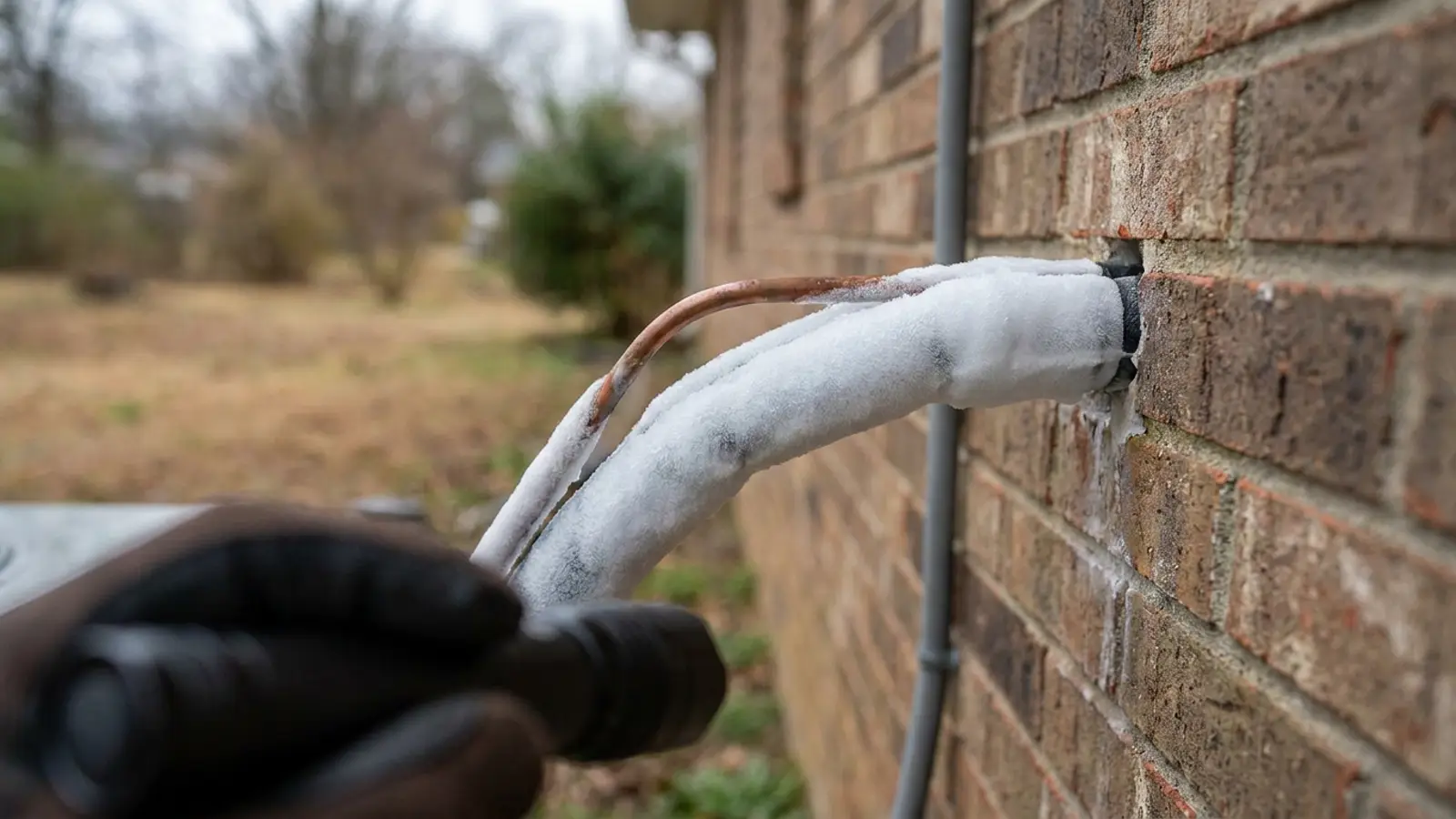
Causes, safe checks and when to call a professional
Expert Answer: AC Frozen
If your system is already a block of ice, deal with the ice first and the diagnosis second. Turn cooling OFF at the thermostat and set the fan to ON — moving room-temperature air across the coil is the safest and fastest way to thaw it. Never chip, scrape or heat the ice. Put down towels, because a fully frozen coil releases a lot of water. Once thawed, replace the filter and restart. If it freezes again within a day, the cause is refrigerant or airflow related and needs a technician.
Check these 3 things first
- 1Set cooling OFF and the fan switch to ON immediately.
- 2Put towels or a shallow pan under the indoor unit before the ice starts dripping heavily.
- 3Confirm the blower actually turns on once switched to fan-only.
How Serious Is This?
GREEN
Usually Manageable
Often resolved with basic homeowner checks and routine maintenance.
YELLOW — this issue's severity level
Inspection Recommended(this issue)
Worth a professional diagnosis soon to avoid a larger repair.
RED
Potentially Serious
Stop using the system and get professional help right away.
Most Likely Causes of an AC Frozen
1. Neglected air filter
The most frequent path to a fully frozen system, especially after several weeks of heavy runtime.
2. Refrigerant leak
Charge loss drives evaporator pressure and temperature down until the coil ices completely.
3. Blower failure mid-cycle
If the blower stops while the compressor keeps running, the coil freezes solid within an hour.
4. Dirty evaporator coil
Years of unfiltered dust bridge the fins and eliminate airflow.
5. Thermostat calling continuously
A stuck cooling call keeps the compressor running past the point of a normal off-cycle defrost.
Safe Homeowner Checks for an AC Frozen
- Set the system to OFF for cooling and the fan to ON.
- Put towels or a shallow pan under the indoor unit and around the air handler.
- Replace the filter now while the system is off.
- Check the condensate drain line for a clog before all the ice melts.
- Wait until no ice remains anywhere on the coil or lines before restarting.
- Restart cooling and watch the coil over the next several hours.
Stop and get help if you notice
- • Water dripping through a ceiling below the air handler.
- • The system refreezing the same day.
- • A blower that will not run — do not restart cooling.
2-Minute Tests for an AC Frozen
Each test isolates one specific cause so you know what you are dealing with before anyone quotes you a repair. Stop immediately if anything feels unsafe.
Blower response check during thaw
About 3 minutesTools: None
Tests for: Blower failure mid-cycle
- Set the thermostat fan switch to ON.
- Listen at the air handler for the blower motor running.
- Feel for airflow at the nearest supply register.
- Normal result
- The blower runs and air is felt at the registers.
- Problem result
- No sound and no airflow from the blower.
What it means: If the blower will not run at all, do not restart cooling — the coil will refreeze immediately once the compressor runs again.
Filter condition check during downtime
About 2 minutesTools: None
Tests for: Neglected air filter
- Remove the filter while the system thaws.
- Inspect it against a light source.
- Replace it with a new filter of the correct size before restarting.
- Normal result
- Light passes through the filter easily.
- Problem result
- The filter is heavily clogged with dust.
What it means: A severely clogged filter is the most common single cause of a fully frozen coil after extended runtime.
Post-thaw restart and monitoring
About 20 minutesTools: A clock or phone timer
Tests for: Thermostat calling continuously
- Confirm no ice remains anywhere on the coil, line set or outdoor valves.
- Restart cooling with a clean filter installed.
- Check the coil again after two to three hours of normal operation.
- Normal result
- The system cools normally with no new frost after several hours.
- Problem result
- Frost begins reappearing within a few hours of restarting.
What it means: Quick recurrence after a proper thaw and filter change points toward refrigerant charge, coil cleanliness, or a stuck cooling call.
What Fixing an AC Frozen Typically Costs
Filter replacement
- DIY
- $0 (filter only)
- Professional
- Included in maintenance
- Typical time
- 5 minutes
Condensate drain clearing
- DIY
- $0-$20
- Professional
- $100-$250
- Typical time
- 30-60 minutes
Blower motor replacement
- DIY
- Not a DIY repair
- Professional
- $350-$1,200
- Typical time
- 1-2 hours
Coil cleaning
- DIY
- Not typically DIY
- Professional
- $150-$400
- Typical time
- 1-2 hours
Refrigerant leak diagnosis and repair
- DIY
- Not a DIY repair
- Professional
- $150-$350 diagnostic, $300-$1,800+ repair
- Typical time
- 2-4 hours
Water damage remediation (if pan overflowed)
- DIY
- Varies
- Professional
- Separate contractor quote
- Typical time
- Varies
| Problem | DIY cost | Professional cost | Typical time |
|---|---|---|---|
| Filter replacement | $0 (filter only) | Included in maintenance | 5 minutes |
| Condensate drain clearing | $0-$20 | $100-$250 | 30-60 minutes |
| Blower motor replacement | Not a DIY repair | $350-$1,200 | 1-2 hours |
| Coil cleaning | Not typically DIY | $150-$400 | 1-2 hours |
| Refrigerant leak diagnosis and repair | Not a DIY repair | $150-$350 diagnostic, $300-$1,800+ repair | 2-4 hours |
| Water damage remediation (if pan overflowed) | Varies | Separate contractor quote | Varies |
Ranges are national estimates for planning only. Local labor rates, equipment access and parts availability change what you will actually be quoted.
Working Through an AC Frozen
Is the blower running when you set the fan to ON?
Yes: Good — allow it to thaw fully.
No: Do not run cooling. Call for service; a blower fault will refreeze the coil immediately.
After a full thaw and a new filter, does the system cool normally?
Yes: Airflow was the cause. Keep the filter fresh and monitor.
No: Have the refrigerant charge and coil evaluated.
Did water overflow the pan during the thaw?
Yes: Check the condensate drain for a clog and inspect for water damage.
No: Continue monitoring.
What the technician will check
- Full airflow and charge evaluation.
- Blower motor and capacitor testing.
- Coil cleaning assessment.
- Condensate system inspection.
- Compressor performance check after prolonged icing.
Repair considerations
- • Repeated deep freezing can shorten compressor life, which affects repair-versus-replace decisions.
- • Water damage remediation is a separate cost from the HVAC repair.
What this actually means
A frozen system is a symptom that has been building for a while. The coil did not ice instantly; it lost the airflow-to-refrigerant balance over hours or days. That is why the thaw is just step one — restarting without correcting the cause simply refreezes the coil and risks compressor damage and water overflow.
When to Call an HVAC Professional About an AC Frozen
- The system refreezes after thawing.
- The blower does not run.
- There is water damage from the thaw.
- You suspect a refrigerant leak.
Preventing an AC Frozen From Coming Back
- • Set a recurring filter reminder.
- • Do not ignore weak cooling — it is the early stage of freezing.
- • Have the drain line cleared annually so a thaw does not flood.
Worth doing yourself
- • Switch to fan-only immediately rather than waiting.
- • Place towels or a container to catch thaw water.
- • Replace the filter while the system is powered down.
- • Check and clear the condensate drain line before restarting.
Do not waste money on
- • Using a hair dryer or other heat source to speed up thawing.
- • Restarting cooling while any ice remains on the coil or lines.
- • Chipping ice off the coil fins.
Related Problems: AC Frozen
- YELLOW — Inspection RecommendedAC FreezingWhy Is My AC Freezing Up?Read this next if ice is actively forming during operation and the visitor wants the mechanism plus the immediate corrective action.View answer
- YELLOW — Inspection RecommendedAC FreezingWhy Is My AC Unit Freezing Up?Read this next if ice located on the physical unit — indoor cabinet or outdoor condenser and line set — with emphasis on where the ice appears and what each location means.View answer
- YELLOW — Inspection RecommendedAC Not CoolingWhy Is My AC Not Blowing Air?Read this next if no air movement at all at the registers — an airflow and blower problem rather than a temperature problem.View answer
- YELLOW — Inspection RecommendedAC Water LeaksWhy Is My AC Leaking Water Inside?Read this next if water is appearing indoors and the visitor is concerned about interior damage — emphasis on containment and stopping the water.View answer
- YELLOW — Inspection RecommendedAC Not CoolingWhy Is My AC Not Cooling?Read this next if general residential AC cooling failure with no specific symptom named yet.View answer
- YELLOW — Inspection RecommendedAC Water LeaksWhy Is My AC Dripping Water?Read this next if active, ongoing dripping observed in real time — emphasis on the drip location and whether that specific drip is normal.View answer
- All AC Freezing problemsBrowse category
Frequently Asked Questions About an AC Frozen
Guidance this page draws on
- ACCA — Emergency coil thaw procedure and restart sequencing.
- U.S. EPA — Refrigerant leak repair requirements when charge loss is suspected.