
Why Is My AC Only Blowing Hot Air?
Causes, safe checks and when to call a professional
Expert Answer: AC Only Blowing Hot Air
"Only" hot air — never any cold, every cycle — points to a complete failure rather than a capacity problem. The realistic causes are a system running in heating mode, auxiliary heat energized during cooling, a compressor that is not running at all, or a refrigerant circuit that has lost essentially all of its charge. Confirm the thermostat mode, then confirm whether the outdoor compressor runs. If heat is being produced during a cooling call, shut the system down at the thermostat and the breaker and get it inspected.
Check these 3 things first
- 1Confirm the thermostat is not stuck calling for heat or emergency heat.
- 2Check whether the outdoor unit runs at all when cooling is selected.
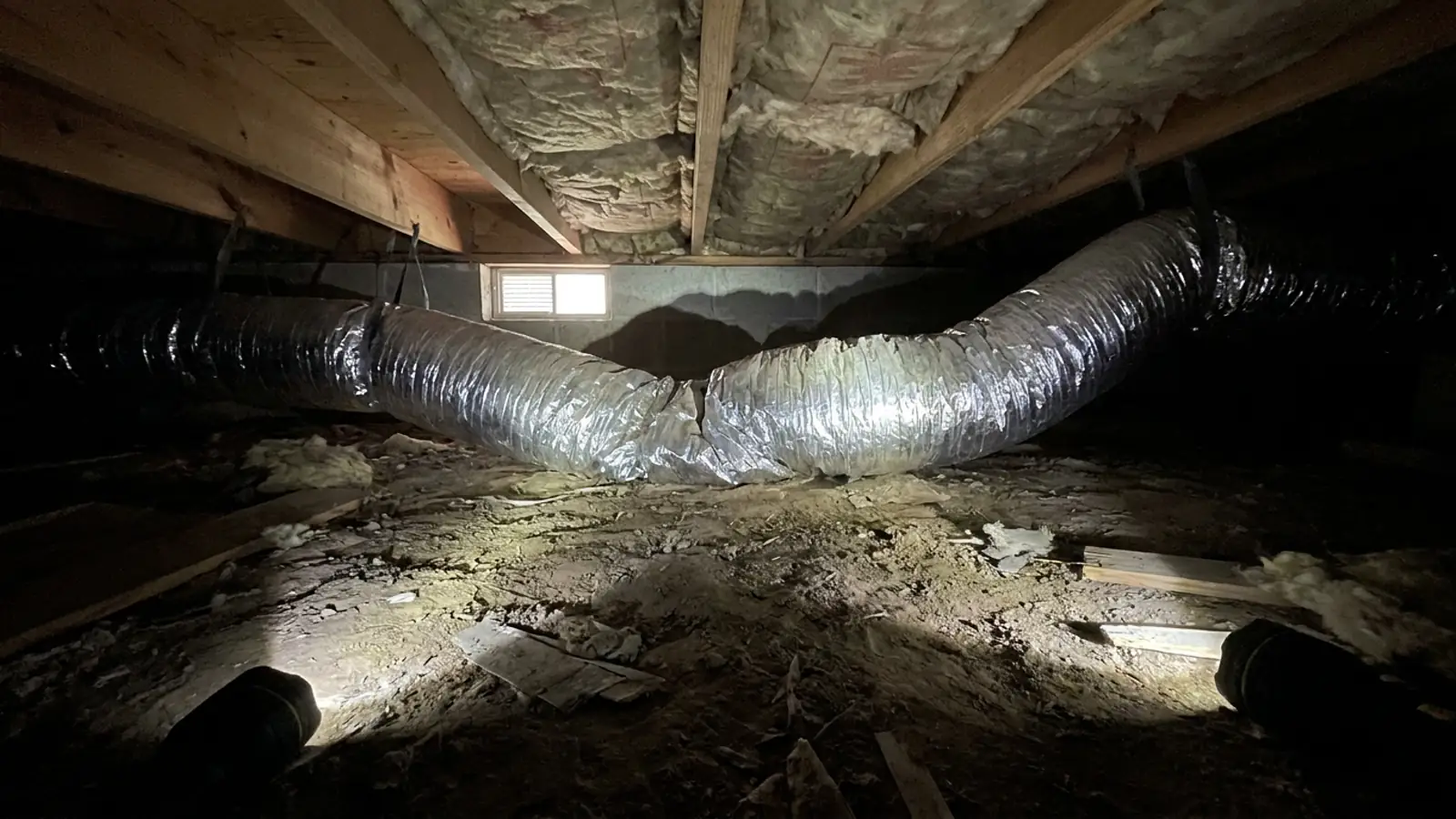
- 3Rule out a disconnected or crushed return duct in the attic.
How Serious Is This?
GREEN
Usually Manageable
Often resolved with basic homeowner checks and routine maintenance.
YELLOW — this issue's severity level
Inspection Recommended(this issue)
Worth a professional diagnosis soon to avoid a larger repair.
RED
Potentially Serious
Stop using the system and get professional help right away.
Most Likely Causes of an AC Only Blowing Hot Air
1. System running in heating mode
A heat pump with a failed reversing valve or a miswired changeover signal runs the heating cycle continuously.
2. Electric heat or furnace energized during cooling
A welded relay, stuck sequencer or crossed thermostat wire adds heat on every call. Usually accompanied by very high energy use.
3. Compressor completely failed or locked out
With no compression there is no cooling at all, and the blower simply circulates house air that keeps getting warmer.
4. Total refrigerant loss
A large leak empties the circuit; low-pressure protection may also lock the system out entirely.
5. Severe duct heat gain or a disconnected return in the attic
A return duct pulled loose in a hot attic feeds the system 120°F+ air, which arrives hot at every register.
Safe Homeowner Checks for an AC Only Blowing Hot Air
- Verify the thermostat mode is COOL, not HEAT, AUTO or EM HEAT.
- Listen at the air handler for heat-related relay clicks or burner operation during a cooling call.
- Check whether the outdoor unit runs at all.
- Inspect accessible attic ducts for a disconnected return.
- Note whether energy bills have spiked — a sign of heat running with cooling.
Stop and get help if you notice
- • Burning smell or visible smoke.
- • Heat that keeps running after the thermostat is turned off.
- • Extremely hot supply air, well above room temperature.
2-Minute Tests for an AC Only Blowing Hot Air
Each test isolates one specific cause so you know what you are dealing with before anyone quotes you a repair. Stop immediately if anything feels unsafe.
Mode lockout check
About 3 minutesTools: None
Tests for: System running in heating mode
- Switch the thermostat firmly to COOL.
- Power cycle the thermostat if it has a reset option.
- Wait 5 minutes and check vent temperature again.
- Normal result
- The system enters cooling and vent air turns cold.
- Problem result
- The system stays in or returns to a heating state.
What it means: The thermostat or its control board is not properly switching modes.
Simultaneous heat and cool check
About 3 minutesTools: None
Tests for: Electric heat or furnace energized during cooling
- Set thermostat to COOL.
- Listen for both the outdoor unit and heating elements running together.
- Note if warm air overwhelms any cool air produced.
- Normal result
- Only the outdoor unit runs; no heating sounds are present.
- Problem result
- Heating elements or a furnace burner run at the same time as cooling.
What it means: A stuck relay or wiring fault is energizing heat during every cooling call.
Compressor operation check
About 3 minutesTools: None
Tests for: Compressor completely failed or locked out
- Go to the outdoor unit during a cooling call.
- Check if only the fan spins with no compressor hum.
- Note any repeated clicking without startup.
- Normal result
- Both the fan and compressor run together with a steady hum.
- Problem result
- Only the fan runs, or repeated clicking occurs with no compressor sound.
What it means: The compressor has failed or is locked out, so the system never actually cools despite the fan running.
Return duct integrity check
About 10 minutesTools: Flashlight
Tests for: Severe duct heat gain or a disconnected return in the attic
- Access the attic if it is safe and reachable.
- Trace the return duct back from the air handler.
- Look for a disconnected boot pulling in attic air.
- Normal result
- Return duct is fully connected and sealed at every joint.
- Problem result
- A section is disconnected or crushed, exposing the duct interior to attic air.
What it means: The system is pulling superheated attic air directly into the return, overwhelming any cooling produced.
What Fixing an AC Only Blowing Hot Air Typically Costs
Thermostat reset or replacement
- DIY
- $0-$150
- Professional
- $150-$350
- Typical time
- 10 minutes to 1 hour
Relay or sequencer replacement
- DIY
- Not a DIY repair
- Professional
- $150-$400
- Typical time
- 1 hour
Compressor replacement
- DIY
- Not a DIY repair
- Professional
- $1,500-$3,000+
- Typical time
- Half day
Return duct reconnection and sealing
- DIY
- $50-$150 (accessible)
- Professional
- $300-$1,200
- Typical time
- 2-4 hours
| Problem | DIY cost | Professional cost | Typical time |
|---|---|---|---|
| Thermostat reset or replacement | $0-$150 | $150-$350 | 10 minutes to 1 hour |
| Relay or sequencer replacement | Not a DIY repair | $150-$400 | 1 hour |
| Compressor replacement | Not a DIY repair | $1,500-$3,000+ | Half day |
| Return duct reconnection and sealing | $50-$150 (accessible) | $300-$1,200 | 2-4 hours |
Ranges are national estimates for planning only. Local labor rates, equipment access and parts availability change what you will actually be quoted.
Working Through an AC Only Blowing Hot Air
Is the supply air hotter than the room air?
Yes: Heat is being added. Shut the system off at the breaker and call for service.
No: The system is circulating unconditioned air — check the compressor.
Does the outdoor compressor run during a call?
Yes: Suspect a reversing valve or a refrigerant circuit failure.
No: Suspect an electrical failure or a safety lockout.
What the technician will check
- Thermostat wiring and control signal verification.
- Reversing valve operation on heat pumps.
- Heat sequencer and relay condition.
- Compressor electrical and mechanical testing.
- Refrigerant pressure check for total loss.
Repair considerations
- • Control and relay faults are usually inexpensive once diagnosed.
- • A dead compressor on an older system frequently favors replacement.
- • Total refrigerant loss means a significant leak that must be located before recharging.
What this actually means
Consistency is the diagnostic clue. Intermittent warmth suggests marginal capacity; unbroken hot output every single cycle suggests the cooling side is entirely absent or that heating is actively running. Those are hard faults that homeowner checks rarely resolve.
When to Call an HVAC Professional About an AC Only Blowing Hot Air
- Supply air is hotter than room air during a cooling call.
- Heat continues after shutting the thermostat off.
- The compressor never runs.
- There is any burning odor.
Preventing an AC Only Blowing Hot Air From Coming Back
- • Verify heat pump changeover during annual service.
- • Have control wiring inspected after any thermostat replacement.
- • Confirm attic ductwork is properly supported and connected.
Worth doing yourself
- • Confirm and correct the thermostat mode.
- • Reconnect an obviously detached flexible duct boot if easily accessible.
- • Replace the filter to rule out airflow-related symptoms.
Do not waste money on
- • Do not attempt to inspect or reset heating elements or sequencers inside the air handler.
- • Do not keep the system running if a burning smell accompanies the hot air.
Related Problems: AC Only Blowing Hot Air
- YELLOW — Inspection RecommendedAC Not CoolingWhy Is My AC Blowing Hot Air?Read this next if vent air is genuinely warm or hot rather than merely uncooled, suggesting reversed mode, heat operation, or a total loss of the cooling cycle.View answer
- YELLOW — Inspection RecommendedAC Not CoolingWhy Is My AC Hot?Read this next if the equipment itself feels hot to the touch or the visitor is describing a hot unit rather than hot vent air.View answer
- YELLOW — Inspection RecommendedAC Not CoolingWhy Is My AC Blowing Warm Air?Read this next if air is warm rather than hot — a degraded-but-running cooling cycle, often intermittent or worsening over time.View answer
- YELLOW — Inspection RecommendedAC Won't StartWhy Is My AC Compressor Not Turning On?Read this next if the compressor specifically will not start while other parts of the system may operate — component-level diagnosis.View answer
- YELLOW — Inspection RecommendedAC Won't StartWhy Is My AC Not Working?Read this next if broadest possible failure phrasing — visitor has not characterized the symptom, so the page must triage before it diagnoses.View answer
- RED — Potentially SeriousAC Operation ProblemsWhy Is My AC Smoking?Read this next if smoke observed at the equipment cabinet itself rather than at the vents — component-level overheating with an immediate shutdown requirement.View answer
- All AC Not Cooling problemsBrowse category
Frequently Asked Questions About an AC Only Blowing Hot Air
Guidance this page draws on
- ACCA — Control-fault troubleshooting for systems that never enter cooling mode.
- U.S. Department of Energy — Attic duct integrity and heat gain guidance.